Where to Surf in Morocco: A Guide to the Atlantic Coast Spots
Every surf spot on Morocco's Atlantic coast — Imsouane, Anchor Point, Killer, Tamraght, Boilers. Level, season and logistics from Agadir.
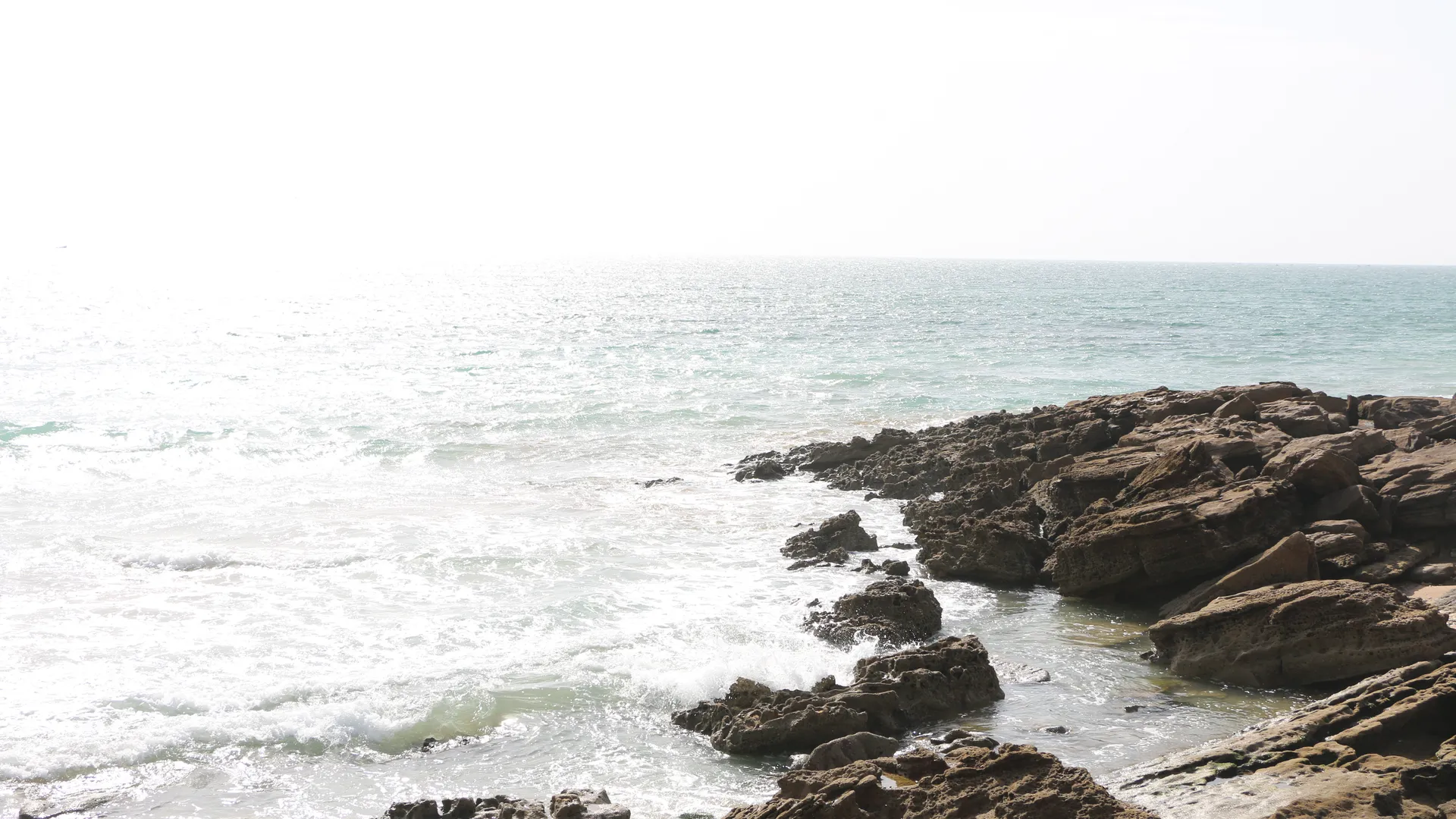
Morocco’s Atlantic coastline runs nearly 1,800 km, from Tangier in the north down to Dakhla. For the surfer, though, everything that matters concentrates on a 60-kilometre stretch north of Agadir — a string of rocky points and sandy bays that catch the northwest swell head-on. Imsouane, Taghazout, Tamraght: three villages every European surfer knows by name, because they deliver what French and Portuguese coasts rarely offer in winter — 18 °C water, waves nearly every day, and points that peel long enough for muscle memory to actually take hold.
This guide covers the eight spots worth knowing before you drop your board in Morocco: where they sit, who they’re for, when they fire, and how to build a trip around them.
The geography in two sentences
The coast curves gently west between Essaouira and Agadir, exposing a sequence of rocky points facing northwest. Winter swells, generated by North Atlantic depressions, arrive in groups onto these points and peel as right-handers — the textbook right-hand point break setup. The payoff: waves that can last thirty seconds, sometimes longer at Imsouane, with clearly defined sections (take-off, working wall, closeout in shallow water).
When to come: the Moroccan surf season
The useful window runs September to April. The peak sits between October and February, when Atlantic depressions roll in a day or two apart. The northerly trades — which make summer technically surfable but unpleasant — soften and often flip offshore in the morning. Off-season, in May and June, waves get scarcer but the water stays pleasant; July and August draw mostly Moroccan holidaymakers and a local bodyboard crowd on the beach breaks.
| Month | Average swell | Prevailing wind | Best level |
|---|---|---|---|
| Sept–Oct | 1.2–2 m | Morning NE | All levels |
| Nov–Jan | 1.5–3 m | E offshore | Intermediate+ |
| Feb–Mar | 1.5–2.5 m | NE / variable | All levels |
| Apr–May | 1–1.8 m | N / NW | Beginner–intermediate |
| Jun–Aug | 0.6–1.2 m | N onshore | Beginner / longboard |
The Taghazout spots (north to south)
Since the 1970s, Taghazout has become the base camp of Moroccan surfing. The first to drop a board here were Californian and Australian travellers on the road to the Sahara — one of them, Frank Mocchi, is credited with naming Anchor Point (after the rusting anchors then bolted into the point). Today the village holds dozens of surf camps, but the spots themselves haven’t changed.
Anchor Point — the reference wave
A kilometre and a half north of the village, Anchor Point is a long rocky right-hander that switches on from about 1.5 m of northwest swell and holds up to 4 m. The wave breaks over a bottom of cobbles and rock shelves, which demands precise peak reading: too far inside and you’ll fall into shallow water, too far outside and you’ll miss the main section. Well-formed sets offer a 200 to 300 metre wall with a fast closing section locals call “the inside”.
Required level: solid intermediate at minimum. More like expert once it’s over 2.5 m.
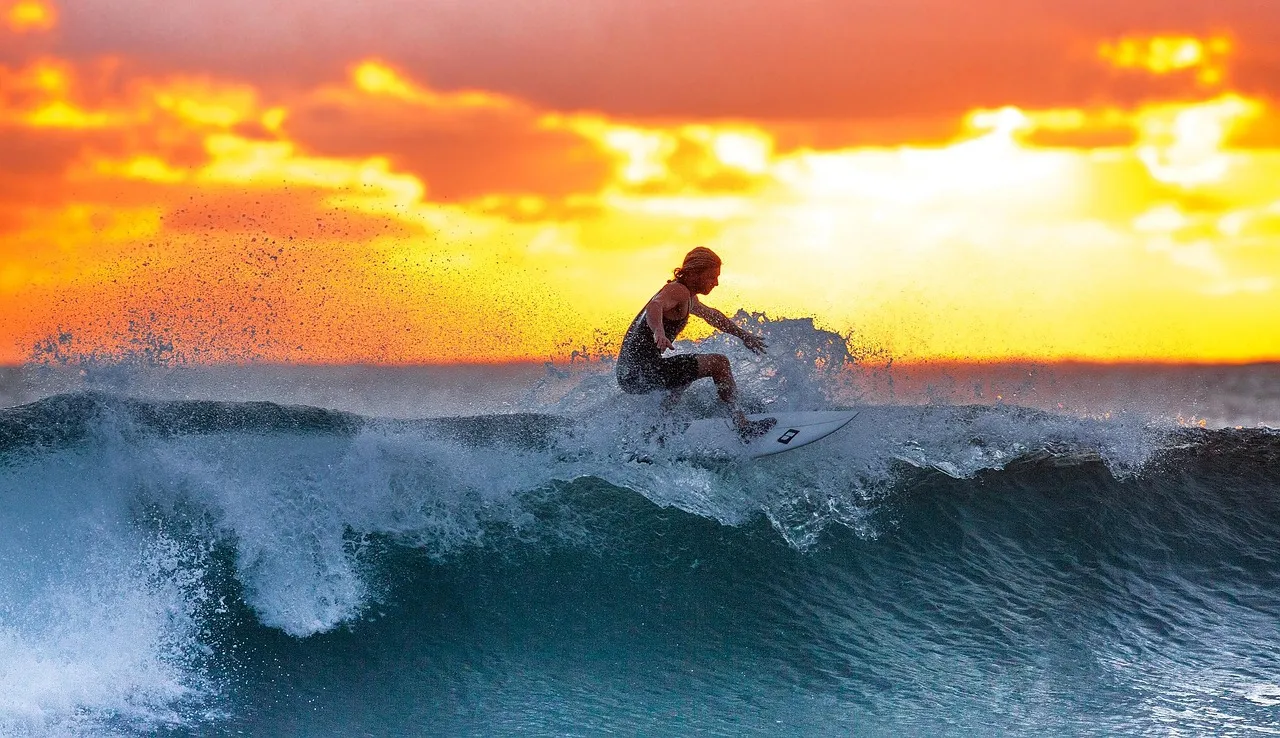
Killer Point — for the XL days
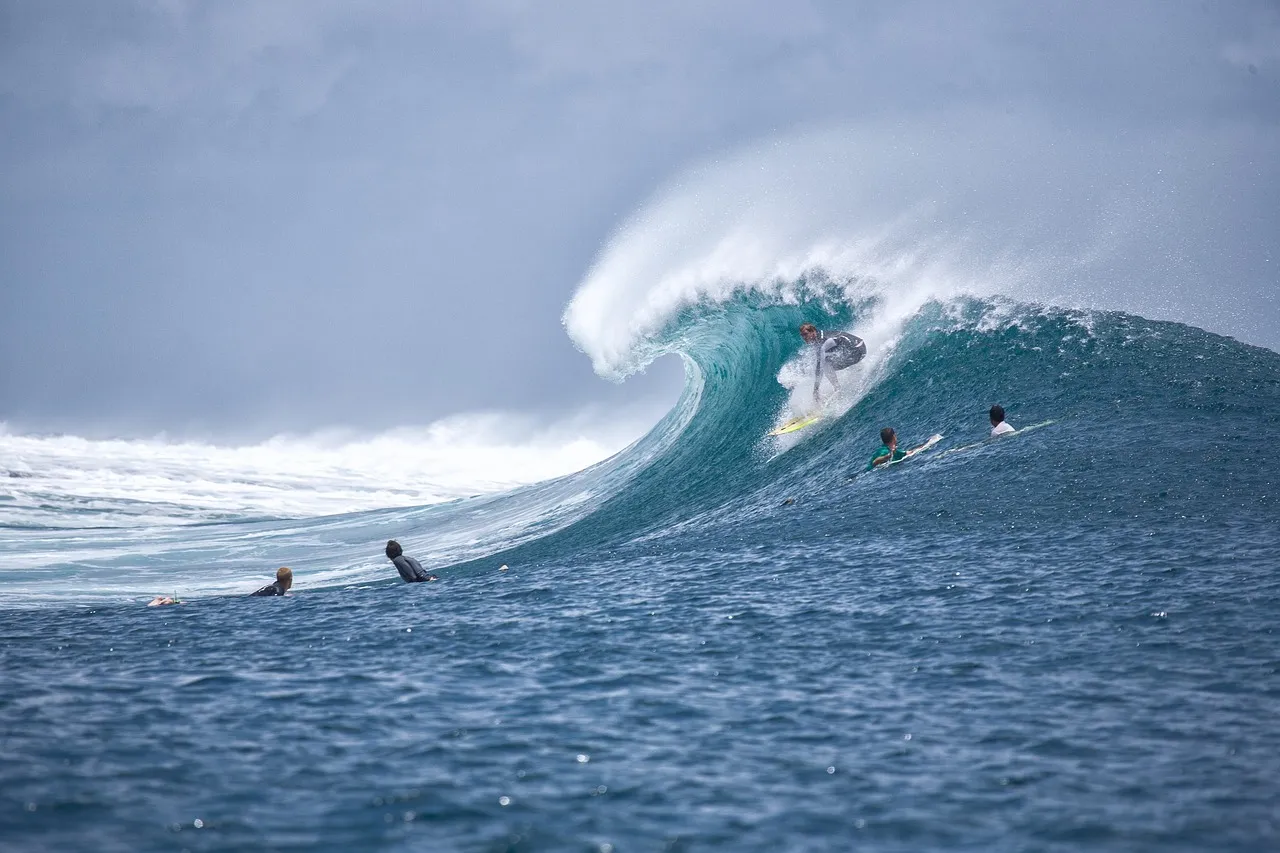
North of Anchor, Killer Point switches on when the swell gets too big for Anchor — so from around 2.5 m. A more powerful wave, a more defined peak, a rockier bottom: this is an advanced surfer’s spot. The name comes from the orcas (killer whales) that occasionally pass offshore, not from any danger of the spot itself — though the second reading works too. Access is from the clifftop, with a technical scramble down on foot.
Hash Point — Anchor’s “little” sister
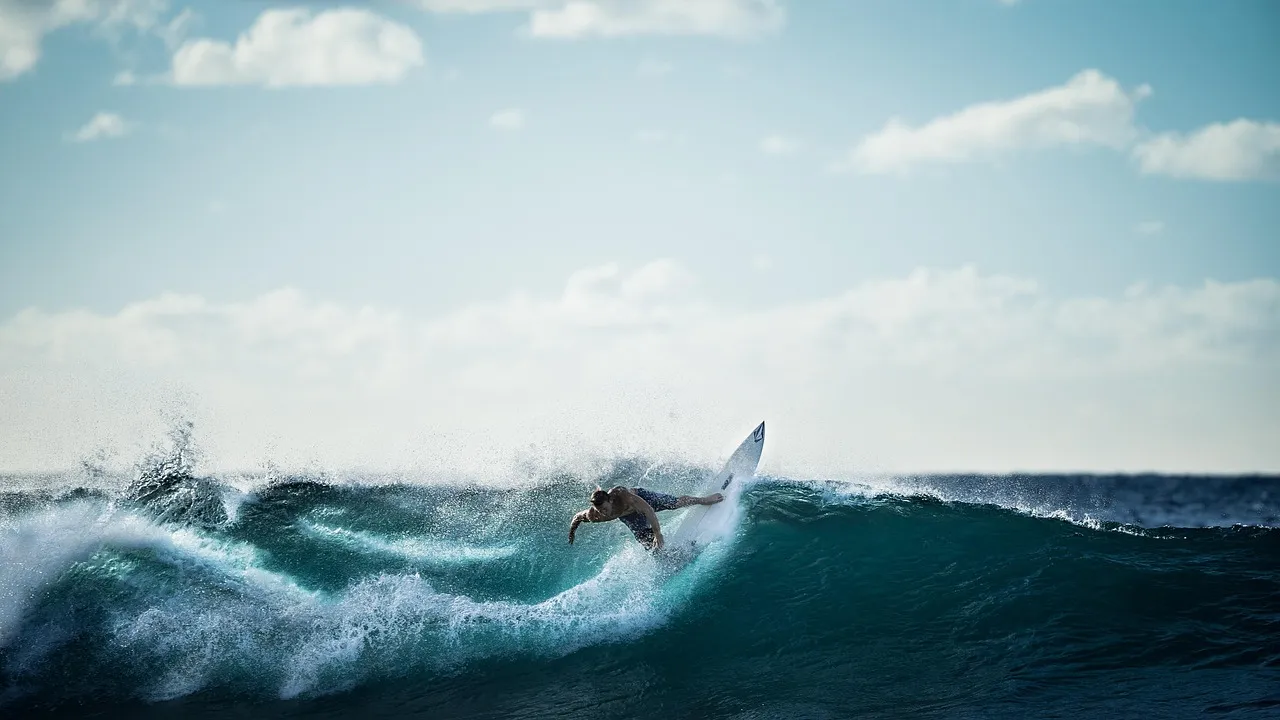
Just south of Anchor Point, Hash Point works on the same swells but delivers a shorter, more accessible wave. Perfect for intermediate surfers who want a taste of point-break riding without Anchor’s pressure. The take-off is gentler; the wave still grinds over rock by the end of the session.
Panoramas — the forgiving option
A sandy beach break right at the foot of Taghazout village, Panoramas is the beginner and longboard option. The bottom is soft, the wave doesn’t warp too much, and this is where most schools run their first sessions. Works on almost any swell from 0.8 m upwards.
Banana Beach — Tamraght’s main beach
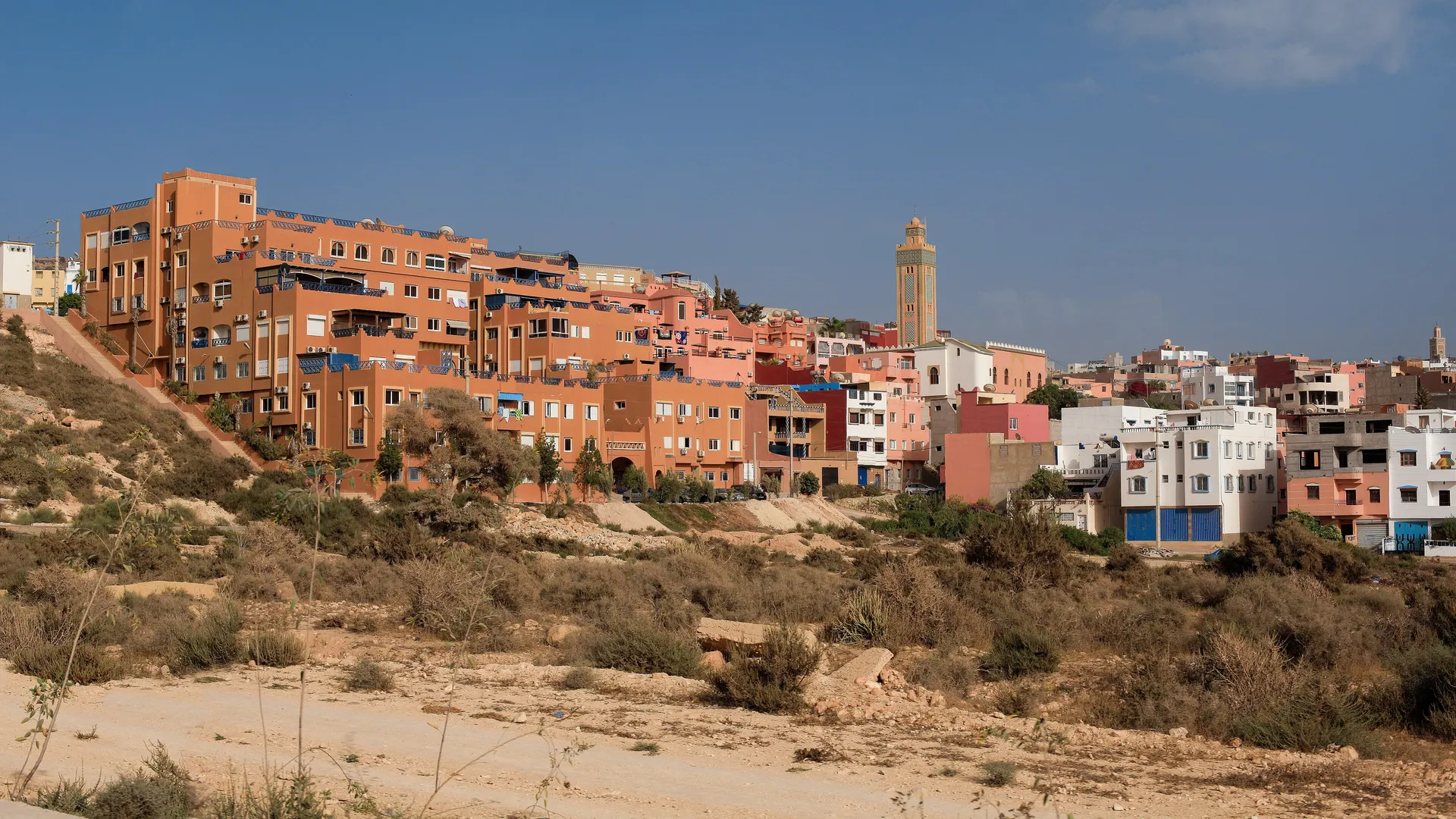
Five kilometres south of Taghazout, in the neighbouring village of Tamraght, Banana Beach is a 1.5 km beach break with several peaks. Softer waves, sand bottom, and the ideal place to step up from whitewater to green waves. The beach takes its name from the banana plantations that drop down to the sea — a remnant of local agriculture still visible today.
Devil’s Rock — the compromise
Between Tamraght and Aourir, Devil’s Rock is a mini rocky point that works on smaller swells. When Anchor is at 0.5 m and Banana is flat, Devil’s Rock can still hand you a decent session. Intermediate level, watch the rocks at low tide.
Boilers — the well-kept secret
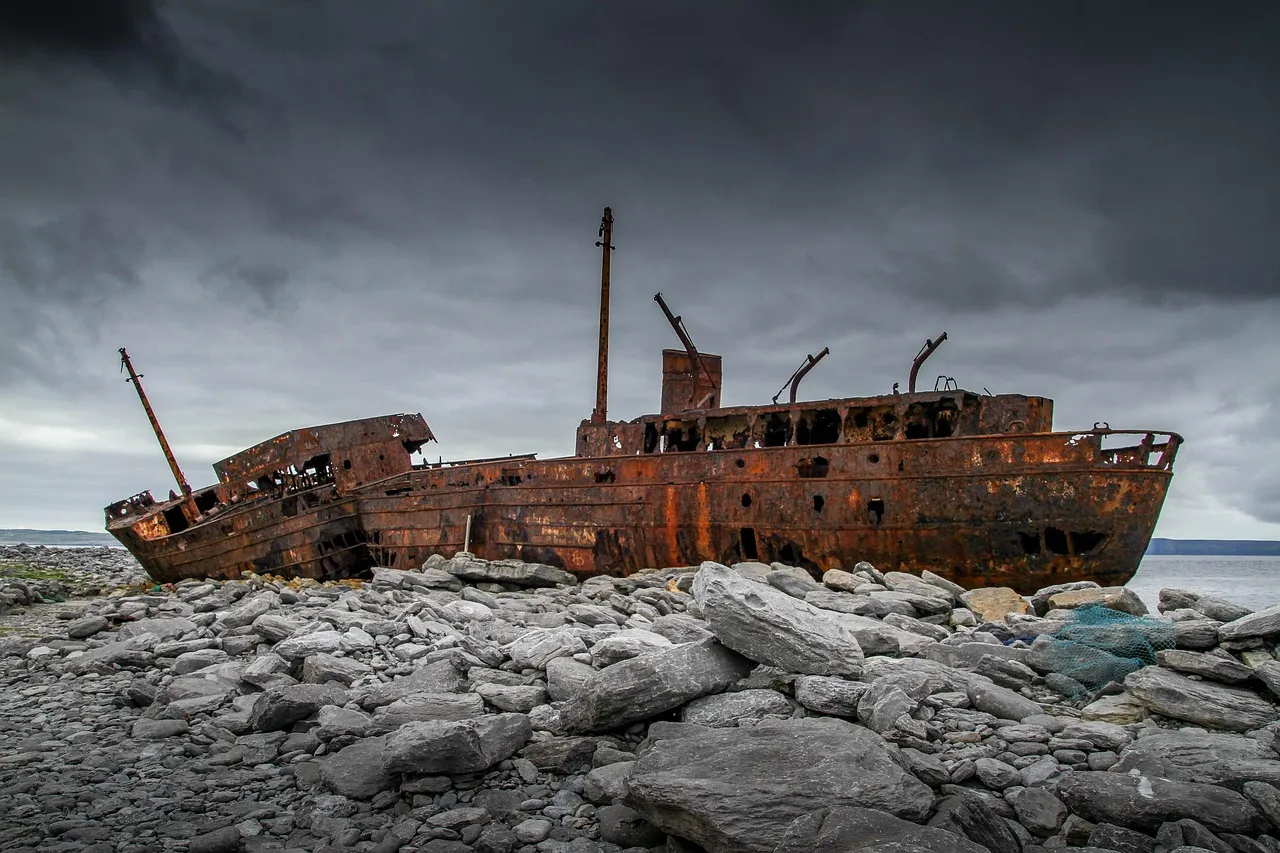
Eight kilometres north of Taghazout, Boilers owes its name to a stranded cargo ship whose boiler still sticks out of the water at low tide. A fast, hollow right-hander over rock, accessed by 4x4 or on foot along the cliff. Reserved for experienced surfers — the take-off is twitchy and the shorebreak pushes you back onto the rocks.
Imsouane: the bay that changes everything
An hour’s drive north of Taghazout, Imsouane is a fishing village built around two very different bays — and the longest right in North Africa.
The Cathedral (Cathedral Bay) — 600 metres of right-hander
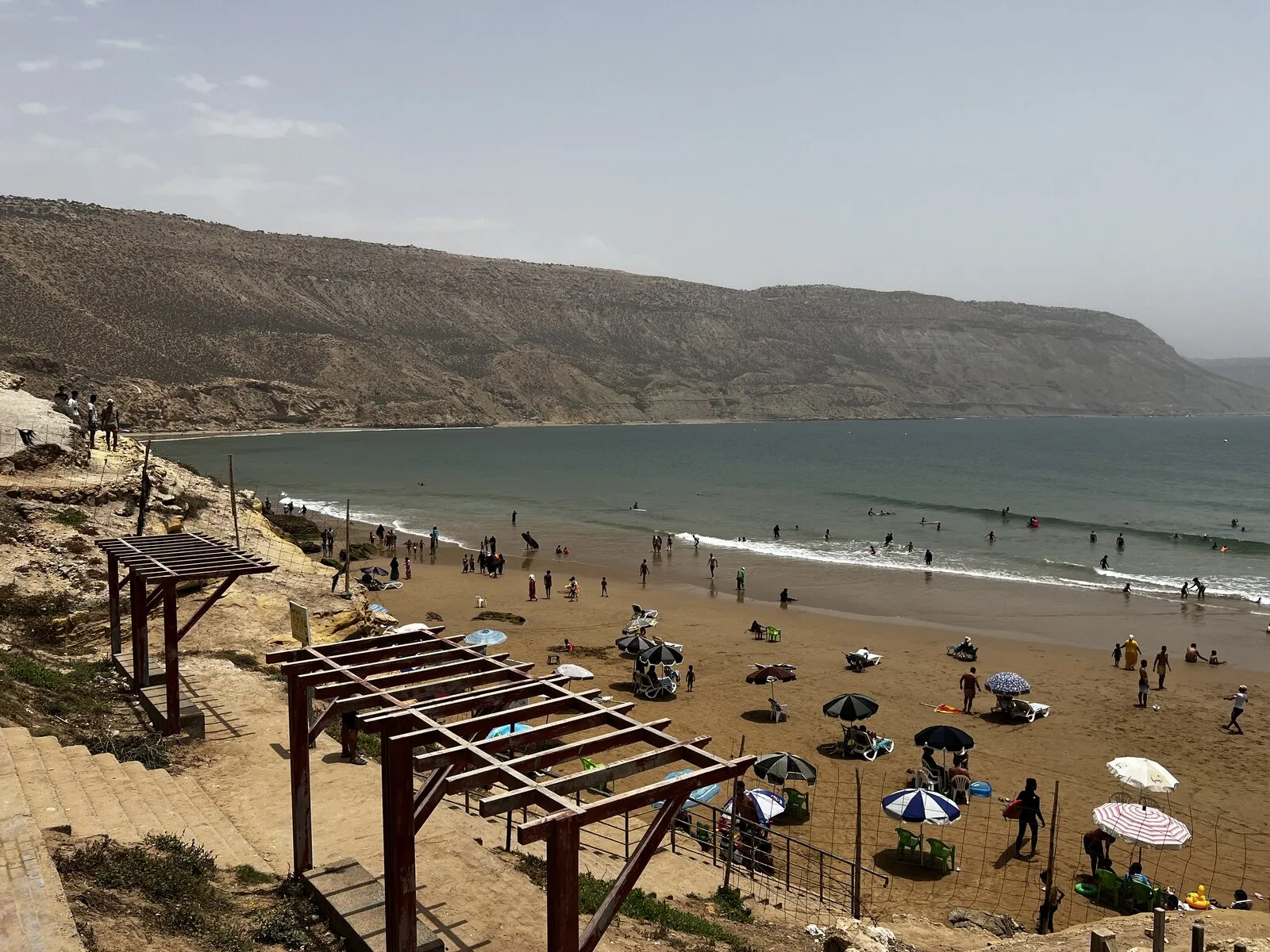
The north bay of Imsouane, nicknamed the Cathedral, is the reason surfers fly in from all over the world. The northwest swell wraps obliquely into the bay, and the wave peels for nearly 600 metres from the rocky point all the way into the village. Not the hollowest wave in Morocco, but probably the longest, slowest and most forgiving — a perfect playground for longboards and intermediates who want to string manoeuvres together without spending three minutes paddling between sets.
The bay works from 0.8 m of swell; above 2 m it gets powerful and the shorebreak closes the inside.
South Beach — the learning ground
The other bay, south of the village, is a sandy beach break facing due west. Smaller, softer, more predictable waves: this is Imsouane’s beginner spot. Most of Imsouane’s schools run lessons here, and it’s also where the village’s surf camps cluster.
Beyond Taghazout-Imsouane: where next?
Once you’ve worked through the Taghazout-Imsouane string, three directions open up new ground:
- Mirleft & Sidi Ifni (250 km south of Agadir) — semi-desert coast, almost empty spots, intermediate to expert. One for a second trip.
- Safi (4 h north of Agadir) — the famous Garden is a world-class barrelling right, but reserved for experts and rarely on. Not a destination in itself.
- Essaouira (halfway between Casablanca and Agadir) — decent beach breaks for intermediates, often windy. A solid “culture + surf” combo thanks to the UNESCO-listed medina.
How to build a trip: the logic of level
| Level | Recommended base | Spots to target |
|---|---|---|
| Complete beginner | Tamraght / South Imsouane | Panoramas, Banana Beach, South Beach Imsouane |
| Beginner–intermediate | Taghazout | Banana, Hash Point, Imsouane Cathedral (small days) |
| Solid intermediate | Taghazout | Hash Point, Anchor Point (small days), Imsouane |
| Advanced | Taghazout | Anchor Point, Killer, Boilers |
A typical week for a solid intermediate: three morning sessions at Anchor Point, two day trips to Imsouane (longboard / cruise), one rest day in Agadir or Paradise Valley, one session at Killer if the swell pushes up. Factor in a local surf coach (350–500 MAD per session) to compress two years of progression into a week.
Logistics: from Agadir airport
Agadir Al-Massira (AGA) international airport is served by Ryanair, Transavia, EasyJet, Royal Air Maroc and several charter carriers. Once you’ve landed:
- Taghazout is 40 km north, around 50 min by road (via the P8).
- Tamraght is 35 km, around 45 min.
- Imsouane is 95 km, around 1 h 30.
A private taxi from the airport runs 250–350 MAD (25–35 EUR) for Taghazout. Most surf camps bundle a transfer into their package — always confirm before you arrive. Independent travellers can grab a rental car (from 250 MAD/day for a city car), which opens up Boilers, Devil’s Rock and Imsouane without depending on a driver.
Recap: the 8 spots to know
- Anchor Point — right-hand point break, 200 m, intermediate+
- Killer Point — XL point break, expert
- Hash Point — accessible point break, intermediate
- Panoramas — beginner beach break
- Banana Beach (Tamraght) — long beach break, all levels
- Devil’s Rock — mini-point, small swells, intermediate
- Boilers — hollow point, expert
- Imsouane (Cathedral + South Beach) — the longest right in North Africa plus a beginner spot
Morocco doesn’t have Portugal’s diversity nor Indonesia’s heavy-swell power. But for three months of the year, between November and February, the Taghazout-Imsouane string delivers the most reliable combination in near-Europe: daily waves, mild water, sun, and a local surf culture built over fifty years. For many, it’s the first long-haul destination of a European surfer’s life — and often the one that turns into an annual fixture.
FAQ
- When is the best season to surf in Morocco?
- September through April. Northwest Atlantic swells arrive consistently, water sits around 17–20 °C in winter, and the northerly trades often drop off in the morning. The peak runs from October to February — when the Taghazout and Imsouane points are at their best.
- Is Anchor Point suitable for beginners?
- No. Anchor Point is a rocky right-hand point break that demands at minimum a solid intermediate level: a committed take-off, the ability to read the peak, and confidence to stay off the rocky bottom. For first sessions, head to Panoramas, Banana Beach, or Imsouane's South Beach instead.
- How do I get from Agadir airport to Taghazout?
- Around 50 minutes by road (roughly 35 km north of Agadir on the P8). A private taxi runs 250–350 MAD. The public bus 32 from central Agadir serves Taghazout for 7 MAD but isn't practical with a board. Most surf camps include a transfer in their package.
- Do I need a visa for a surf trip to Morocco?
- EU, Swiss, British, US and Canadian nationals can enter visa-free for up to 90 days. A passport valid six months beyond your return date is enough. Boards travel as checked baggage without issue; some airlines (Royal Air Maroc, EasyJet, Transavia) charge a surcharge of around 50–80 EUR.
- Imsouane or Taghazout — which village should I pick?
- Taghazout for spot density (Anchor, Killer, Hash, Banana, Boilers all within 15 min) and a low-key nightlife. Imsouane for one reference wave — the longest right in North Africa, 600 m on the right day — and a quieter village. Most travellers split: base in Taghazout, day trip to Imsouane when the north swell drops.