Imsouane: Complete Guide to the Village, the Surf and Cathedral Bay
The fishing village of Imsouane holds the longest right in Africa. Spots, lodging, access from Agadir, and how it compares with Taghazout for surf trips.
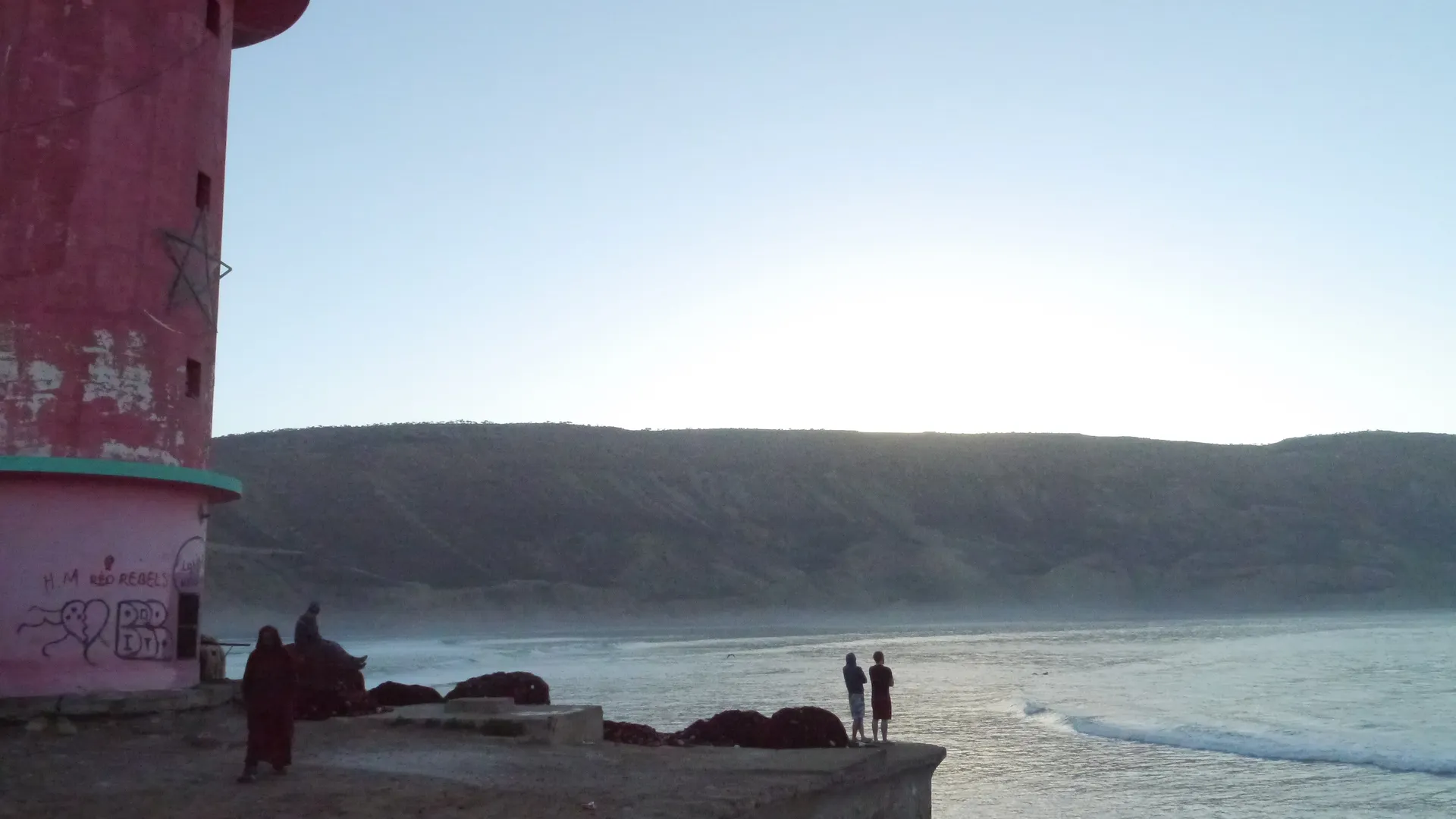
Ninety-five kilometres north of Agadir, the P8 pulls away from the ocean, climbs onto an arid plateau of argan and eucalyptus, then drops sharply back down to a cove. That’s Imsouane — a fishing village of around two thousand people, tucked between two bays that have almost nothing in common. The better-known one, to the north, holds a right-hander that peels for 600 metres: the longest right in North Africa, nicknamed the Cathedral. The second, to the south, is a sandy beach break where people learn.
This guide covers everything worth knowing before you put a board in the water here: the geography of both bays, the village’s history, how to get there, where to stay, and how to split a trip between Imsouane and Taghazout.
The village: a fishing port that became a reference spot
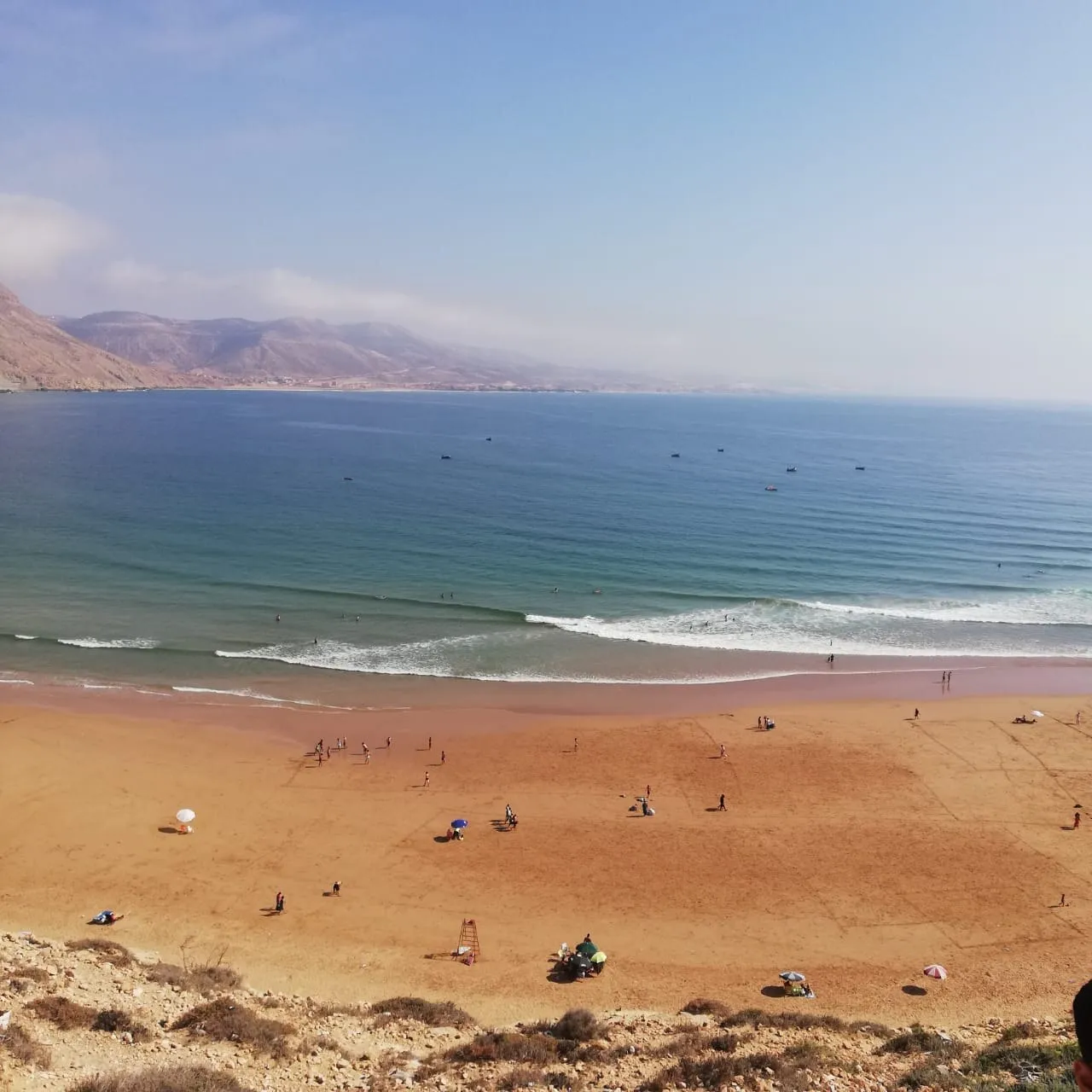
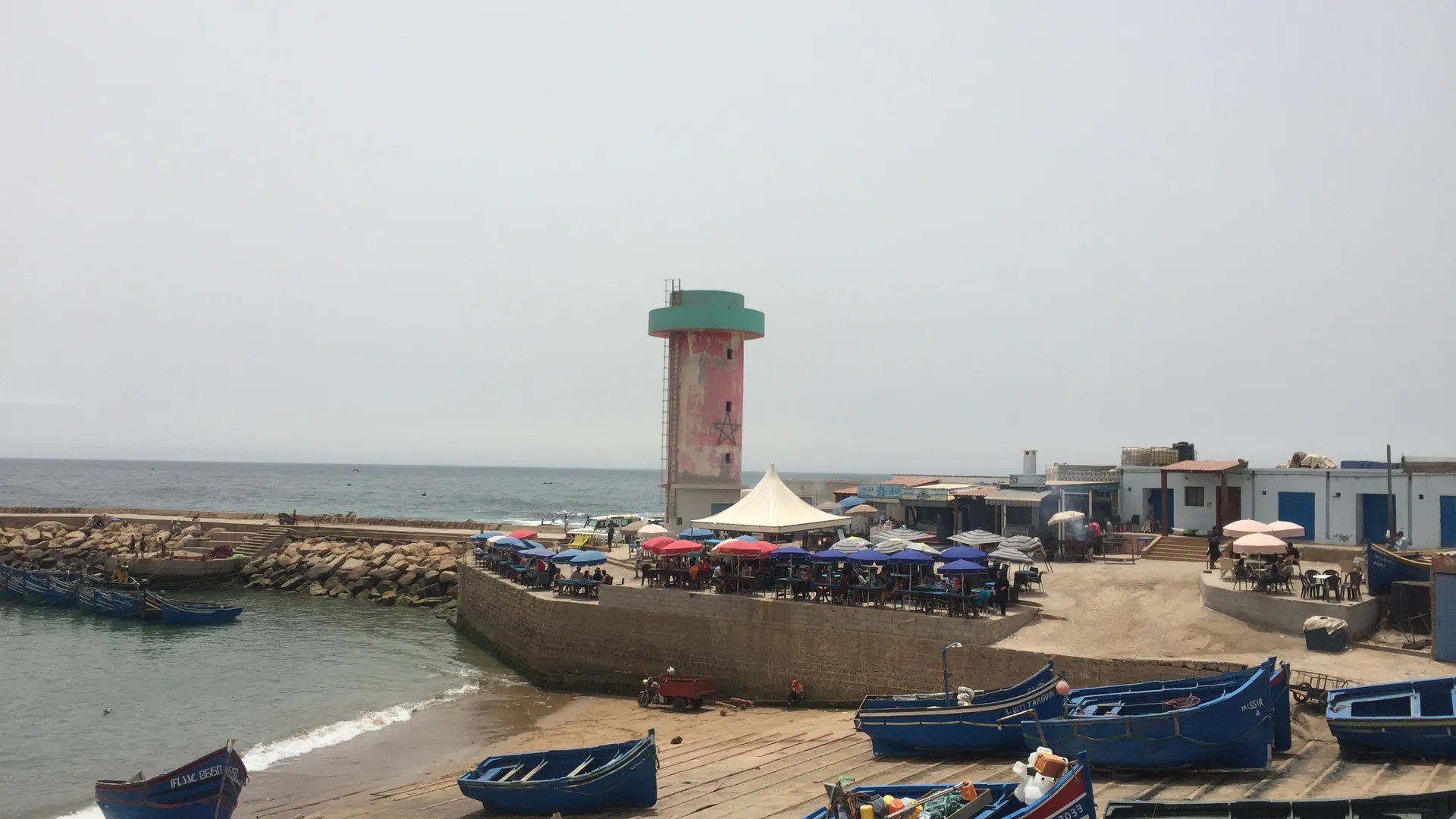
Imsouane existed long before surfing. It’s first and foremost an artisanal fishing port — sardine boats, blue skiffs, an early-morning fish market — and that activity still anchors most local livelihoods. The first surfers turned up in the late 1970s, following the same trail as those pushing on towards Taghazout: European van travellers, Californians en route to the Sahara. The wave in the north bay, slow and forgiving, quickly earned its Cathedral nickname — a nod to the near-religious length of the wall.
The village held onto its fishing-port rhythm for a long time: no high-rise hotels, no “surf town” marketing, just low whitewashed buildings. That’s still largely the case, even though twenty or so surf camps have opened since the 2010s. The construction of a new fishing port between 2015 and 2018 reshaped the currents in the north bay — the wave is still there, but some old hands say it lost a bit of its softness. That’s a local debate.
The two bays: the Cathedral and South Beach
Imsouane is one of the rare Moroccan spots to offer two radically different configurations in the same cove.
The Cathedral (Cathedral Bay) — the long right-hander
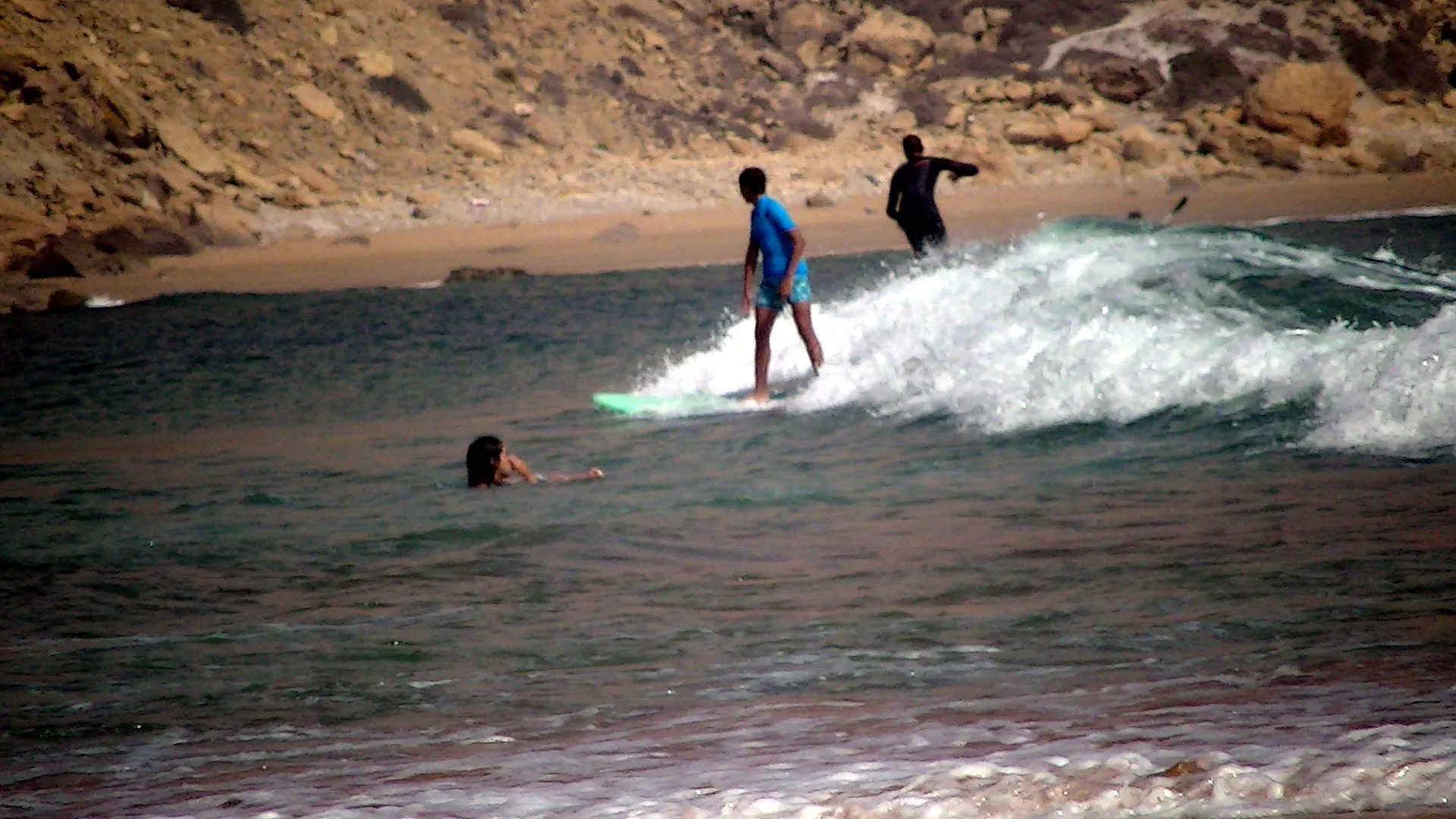
The north bay opens to the west-northwest, catching the winter Atlantic swells head-on. The swell wraps obliquely onto a rocky point at the north end of the bay, and the wave breaks over a mixed rock-and-sand bottom that flattens out gradually as you head inside. The result: a soft, long right-hander that slows down gently rather than closing out sharply. On the best sets, the ride runs from the rocky point all the way to the fishing-boat moorings — anywhere from 200 to 600 metres depending on swell and tide.
It’s a forgiving wave. It’s almost never hollow, has no dangerous section, and gives you the time to work manoeuvres you wouldn’t get to attempt elsewhere. That’s why Imsouane has become a favoured playground for longboarders and progressing intermediates — and why international travellers come and plant their flag here for weeks at a time each winter.
Ideal conditions:
- Swell: 1.2–2 m, northwest
- Wind: easterly offshore or no wind
- Tide: mid-tide rising (low tide exposes more rocks on the inside)
- Level: solid intermediate minimum for the full ride; the inside sections are accessible to progressing beginners
Above 2 m of swell, the bay can get powerful and the shorebreak closes the inside; above 2.5 m, locals often switch back to Taghazout.
South Beach — the learning ground
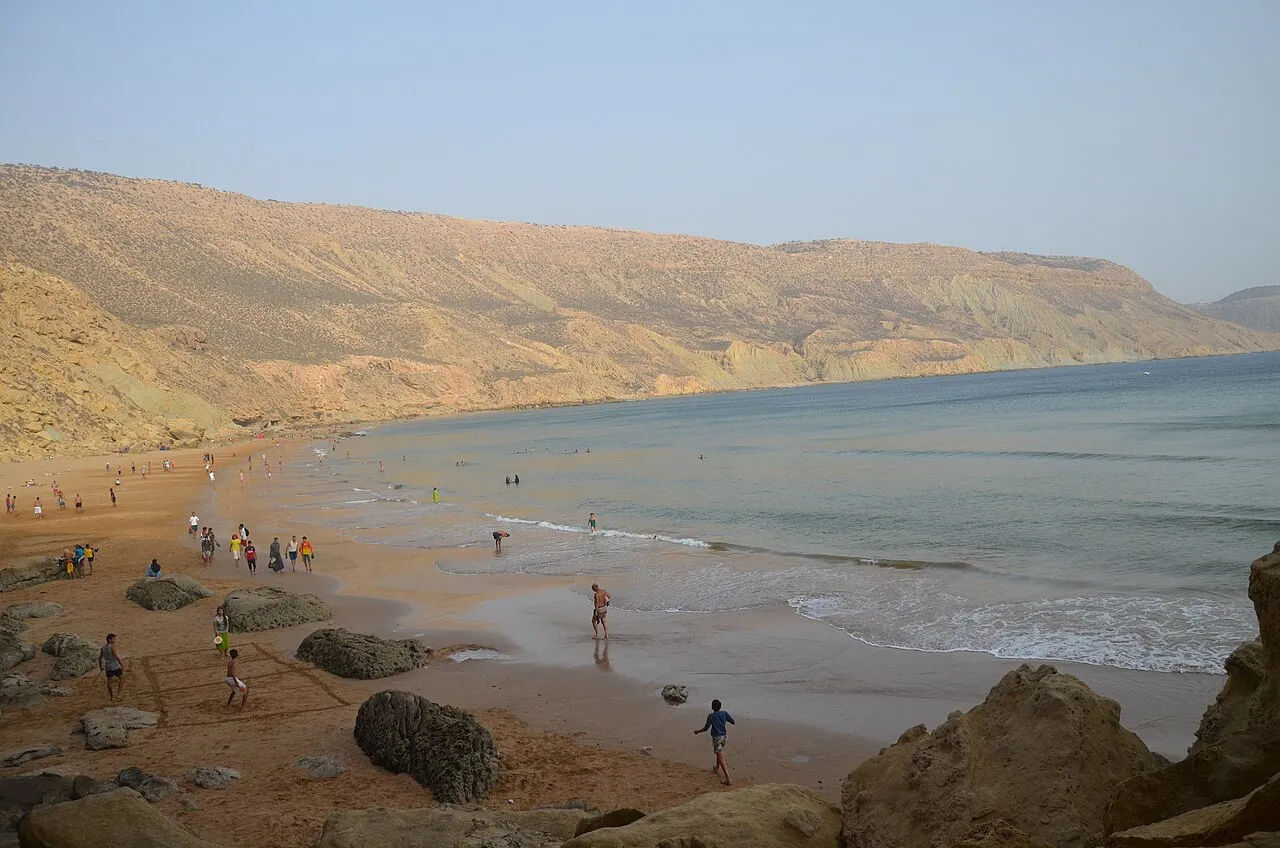
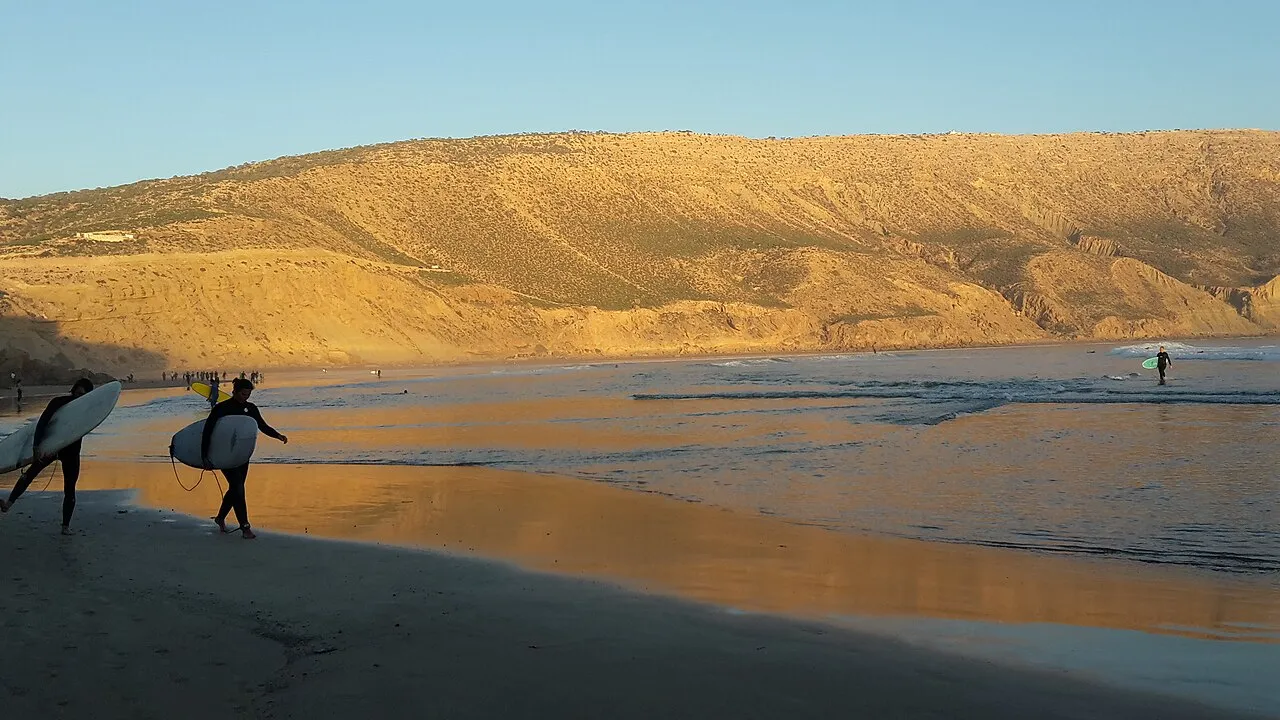
At the geographical opposite of the village, a ten-minute walk south of the port, the south bay is a sandy beach break facing due west. The wave is smaller, more predictable and softer than in the north bay, and the bottom is fully sandy — no rocks to dodge. This is the beginner option par excellence, and it’s where most of the group lessons run.
Three things to know about South Beach:
- Works from 0.6 m of swell and only becomes too powerful above 1.8 m.
- The northerly wind (dominant in summer) is side-shore rather than onshore here — the beach stays surfable even when Taghazout shuts down.
- Less crowded than the Cathedral: you share the session with schools and a handful of locals, never with a crowd.
How to get to Imsouane
From Agadir airport (Al-Massira, AGA)
Ninety-five kilometres, around 1 h 30 by road via the N1 then the P8 (the old coastal road). Three options:
| Mode | Indicative price | Duration | Notes |
|---|---|---|---|
| Private taxi | 400–550 MAD | 1 h 30 | Book via the hotel; agree the fare before leaving |
| Surf camp transfer | included | 1 h 30 | Almost every Imsouane camp offers one |
| Rental car | 250 MAD/day + | 1 h 30 | Most flexible if you bounce between Imsouane / Taghazout / Essaouira |
| Bus + taxi | 50–80 MAD | 3 h+ | Bus to Tamri then shared taxi — awkward with a board |
From Taghazout
Fifty-five kilometres on the coastal road that hugs the cliffs. Expect 1 h 10 by car, more if the wind is up and you stop at Aftas or Cap Tafelney. It’s a drive worth doing at least once for the scenery — red cliffs, deserted beaches, herds of goats in the argan trees.
From Essaouira
Sixty kilometres south of Essaouira. 1 h 10 to 1 h 20, less spectacular but quicker. This is the option for travellers running a Marrakech → Essaouira → Imsouane → Taghazout loop.
Where to stay in Imsouane
The village has no large resort. Options break down into three categories:
Surf camps with included lodging — the bulk of the offer. Standard package: bed + breakfast + 2 guided sessions + transfer; budget 350–650 EUR per week depending on standard. Best-known camps include The O Experience, Magic Bay Surfhouse, Imsouane Hostel. Always check whether the package covers transfers from Agadir.
Independent hotels & guesthouses — a handful of riads and small seaside hotels. Rates 25–60 EUR per night for a double room. More flexible if you want to surf solo or with a private coach.
Airbnb rentals — fishermen’s flats or traditional houses by the night. Budget 40–80 EUR per night for a family. Upside: kitchen, port market on the doorstep.
A word of warning: supply is limited and winter (October to March) is high surf season. Book 6–8 weeks ahead for January-February weeks.
Eating in Imsouane
No gourmet scene in Imsouane, but what most surfers remember: grilled fish straight at the port. Around 11 in the morning, the boats come in and several open-air spots grill the day’s catch — sardines, sea bream, squid — served with Moroccan salad and round bread. Thirty to eighty dirhams a head, and probably the meal you’ll think back to most.
For fuller dinners, Pole Pole, Tarefa and Café de la Plage are the names that keep coming up. Local and international food (pizzas, bowls, tagines), 80–150 MAD a plate.
Three trips to make from Imsouane
If you’re staying more than a week, two or three break days let you explore the coast around without adding flights.
Cap Sim (15 km north) — Dramatic cliffs and a deserted beach where flamingos sometimes nest. Best in a 4x4 or a high-clearance vehicle on the dirt track, not a city car.
Tafedna (35 km north) — A smaller port, even quieter than Imsouane, on the same rocky stretch of coast. A beachside fish restaurant, halfway to Essaouira.
Essaouira (60 km north) — The UNESCO-listed medina, the blue-boat harbour, the 18th-century Portuguese ramparts. A perfect day trip if the swell goes flat at Imsouane.
Imsouane or Taghazout: how to choose
A question you hear every day in the surf camps. The honest answer: it depends on the kind of trip you want.
| Criterion | Imsouane | Taghazout |
|---|---|---|
| Spot diversity | 2 bays | 6–8 spots within 15 km |
| Headline wave | One long, soft right-hander | Anchor Point, more committed |
| Recommended level | Beginner–intermediate+ | Intermediate–advanced |
| Nightlife / restaurants | Very quiet, closes by 22h | Low-key but more choice |
| Access from Agadir | 1 h 30 | 50 min |
| Crowd on the peak | Moderate (except the Cathedral in winter) | Denser, Anchor gets packed |
Classic strategy: sleep in Taghazout for spot density, day-trip to Imsouane on the weeks when the northwest swell is moderate and the Cathedral is firing. Almost every Taghazout surf camp offers a day excursion to Imsouane for 200–300 MAD.
Recap: what to remember before you leave
- Imsouane sits 95 km / 1 h 30 from Agadir, 55 km / 1 h 10 from Taghazout.
- Two bays: the Cathedral (long right, intermediate+) to the north, South Beach (beginner beach break) to the south.
- Surf season: September to April, peak November-February.
- Lodging is limited — book 6–8 weeks ahead in high season.
- Pair it with a stay in Taghazout to maximise spot variety.
- Pair it with Essaouira for the cultural side (UNESCO medina, 1 h 10 north).
To place Imsouane in the wider Moroccan picture and decide where to anchor the rest of your trip, see our guide to Morocco’s surf spots.
FAQ
- How far is Imsouane from Agadir?
- About 95 kilometres north of Agadir via the N1 then the P8, roughly 1 h 30 by car. Expect 350–500 MAD for a private taxi. From Taghazout, it's 55 km — around 1 h 10 on the coastal road that hugs the cliffs.
- Is Imsouane Bay suitable for beginners?
- South Beach, yes — it's a sandy beach break with a soft bottom, perfect for first sessions and longboarding. The north bay (the Cathedral) is longer and faster; it suits solid intermediates who can handle a point-break take-off and 600 m of wall without burning out.
- How long does a wave at the Cathedral last?
- On the right days (1.2–2 m northwest swell, easterly wind or no wind), a set can peel from 200 to 600 metres from the rocky north point all the way into the bay. It's the longest wave in North Africa and one of the longest right-handers in the Europe-Africa region.
- Should I stay in Imsouane or Taghazout?
- Imsouane if you're mainly chasing the long right and want a quiet village. Taghazout if you want maximum spot density within a short drive (Anchor, Killer, Hash, Banana, Boilers) and a low-key nightlife. Prices are similar; most travellers split between the two.
- Does Imsouane work in summer?
- The Cathedral works almost year-round but goes small (under 0.8 m) in June-August. South Beach stays surfable through summer — that's actually when the schools are busiest. For real sessions, target October to March.