When to Surf Taghazout: Best Months, Crowds, Conditions
Taghazout's surf season month by month — Anchor Point, Hash Point, Killer conditions. When to book based on your level and how many surfers to expect.
At a glance: The best month to surf Taghazout is November (ideally the second half) — consistent swell, offshore wind, moderate crowds, water 19–20 °C. December and February follow closely with cooler water (17–18 °C). Avoid July–August (flat, north wind) and the week of 23 December to 2 January (Anchor Point hits 120–150 surfers at the peak). For beginners: April and October offer the gentlest conditions.
This guide differs from the general Morocco surf season guide by focusing on Taghazout and its immediate zone: Anchor Point, Hash Point, Killer Point, La Source, and the surrounding beach breaks. If you’re still deciding between Taghazout, Imsouane and Essaouira, read the general guide first; if you’ve picked Taghazout and want to know which week to book, this one is for you.
The framework: three variables that decide quality
Picking the right month for Taghazout comes down to balancing three variables:
- Swell — Taghazout lives on North Atlantic depressions, which start dialling in around October and fade after March. Peak consistency: November through February.
- Wind — the offshore breeze (easterly, off the desert) sets up the best conditions on the points. It blows often from November to February, occasionally in October/March, almost never in summer.
- Crowds — Taghazout is a mini-capital of European winter surfing. Germans, French, British and Dutch converge on Anchor Point. Density peak: Christmas week and the first days of January. Density trough: September, late March, April.
The optimal month maximises swell + wind and minimises crowds. That’s usually November (and secondarily February).
Month by month: what actually works
October — the season opener
Swell: moderate, very quiet first half, the first depressions arrive in the second half. Wind: variable. Water: 21 °C. Crowds: light. Best for: all levels.
October is the transition month. Beach breaks (Banana Beach, Aourir) work well for beginners, schools run at full capacity. Anchor Point starts firing after 15 October but remains irregular. A good month for a first surf trip or for intermediates wanting to dodge the November crowds.
November — the benchmark month
Swell: consistent, 1.5–2.5 m most days. Wind: offshore several days a week. Water: 19–20 °C. Crowds: moderate. Best for: intermediate to advanced.
If you only remember one month, it’s this one. Anchor Point works 3–4 times a week, Killer a bit less, Hash Point almost daily. Camps are busy but not saturated. The second half is statistically better than the first (northerly winds have calmed). The 15–30 November window is the one to target if you have flexibility.
December — peak season
Swell: very consistent, sometimes large. Wind: offshore frequent. Water: 18 °C. Crowds: heavy, climbing toward Christmas. Best for: intermediate to advanced.
December delivers the best surf conditions of the year — but also the heaviest surfer density. To make the most of it, book the first half (1–15 December), before the holiday rush. The 23–31 December week is the toughest: Anchor Point at 100+ surfers, parking saturated, surf shop waitlists. Worth it if you’re coming for the atmosphere rather than session quality.
January — cold but consistent
Swell: very consistent. Wind: often offshore in the morning. Water: 17–18 °C. Crowds: very heavy first week, then sharp drop. Best for: intermediate to advanced.
January follows the December logic: excellent conditions, crowds shaped by the calendar. The 8–31 January window is arguably the best value of the whole season: the year-end crowd has gone home, flights are cheaper, conditions are top-notch. 3/2 mm wetsuit mandatory — early mornings are cold (air 12–14 °C).
February — the hidden window
Swell: consistent, sometimes huge. Wind: often offshore. Water: 17–18 °C. Crowds: moderate. Best for: intermediate to advanced.
February is Taghazout’s best-kept secret. Peak tourist season is over, but the Atlantic keeps pushing serious depressions. European school holidays (varying by country) inflate crowds for one or two weeks, but outside those weeks, Anchor Point sees the same density as November. An excellent month for advanced surfers who want size without the December crush.
March — end of season
Swell: moderate to consistent, early March better than late. Wind: variable, northerly winds returning. Water: 18 °C. Crowds: moderate. Best for: intermediate.
The season is winding down. Beach breaks stay excellent, but Anchor Point becomes irregular. A good compromise for a mixed trip (surf + other activities, Paradise Valley, day-trips to Imsouane). Avoid the last week of March, which marks the transition to April conditions (strong wind, weak swell).
April — beginners’ month
Swell: weak to moderate. Wind: often strong, northerly. Water: 19 °C. Crowds: light. Best for: beginner to intermediate.
April is the best month to learn to surf in Taghazout. Waves are smaller, schools aren’t saturated, water is warm enough. Advanced surfers will find little to do on the points — but Banana Beach, Aourir and Plage du Camping remain reliable.
May to September — surf-yoga summer
Swell: rare. Wind: northerly trade winds, strong and persistent. Water: 21–24 °C. Crowds: light on points, moderate on beach breaks. Best for: beginners and longboards.
For five months, Taghazout is no longer the surf destination its photos suggest. The points are flat or messy. But it’s the season for longboarding, yoga, and early-morning boardshort sessions. Beach breaks still work, especially early in the morning before the north wind picks up. A good fit for a combined surf-beginner + cultural travel or yoga trip.
Which month for your level
Beginner (0–10 sessions)
- May to October: gentle conditions on Banana Beach and Aourir, warm water, schools running at full pace.
- Outside high season to get the instructor’s attention.
- April is probably the best compromise: enough waves to learn on, no crowds.
Intermediate (can catch a green wave, surf for an hour without breaking a board)
- November, February, early March: point-break conditions without December crowds.
- Banana Beach works year-round.
- Avoid Christmas week (Anchor is effectively closed to intermediates at that density).
Advanced (surfs the points, handles a busy lineup)
- First half of December, second half of January, all of February: best conditions, the windows where quality beats density.
- Late October for surfers who want to open the season on empty spots.
Which week to avoid — and why
- 23 December to 2 January: maximum density on Anchor Point. Unless you’re at the level where you can hold your own in a 150-surfer lineup, pick another week.
- French school holidays (zones A, B, C — varies year to year): local peak in camp bookings. Check the French school calendar before booking.
- Mid-July to mid-August: not for the conditions (which are weak all summer) but for local tourist-tariff inflation and general non-surfer crowds.
- First week of October: statistically the quietest swell window. Anchor Point can stay flat for 7 days straight.
The booking rule
If you have the flexibility to pick your week: mid-November, mid-January or mid-February. These three windows capture the best conditions without the over-density of European school-holiday weeks.
For longer trips (2–3 weeks), any period between late October and late February delivers a rich experience — the day-to-day variability means you’ll inevitably land on 4–6 great sessions regardless of the week you pick.
For broader Morocco-wide seasonality (including Imsouane, Essaouira and south of Agadir), see our complete guide to Morocco’s surf season. For inter-village distances once you’re on the ground, see distances between Agadir, Tamraght and Taghazout.
FAQ
- What is the best month to surf Taghazout?
- For the combination of consistent swell, offshore wind and manageable crowds: the second half of November. Atlantic depressions are dialled in, Anchor Point fires several times a week, the water is still 19–20 °C, and the Christmas rush hasn't arrived yet. February comes second for the same reasons on the back end of the season.
- Can you surf Taghazout in summer?
- Yes at Banana Beach, Aourir and Plage du Camping for beginners and longboarders — no on the points (Anchor, Killer, Hash) which sit flat or messy from June to August. The northerly trade winds blow daily, north-west swell is rare. Water is 22–24 °C, no wetsuit needed. For a 'high-performance' surf trip, avoid July and August.
- When does Anchor Point actually work?
- Anchor Point needs at least 1.2 m of north-west swell and offshore (or no) wind. Statistically these conditions show up 2 to 4 times a week between late October and mid-March, more rarely in April and September. A 7-day trip in high season usually delivers 3 to 5 sessions on Anchor — not every day, but enough to actually live the wave.
- How crowded is Taghazout in high season?
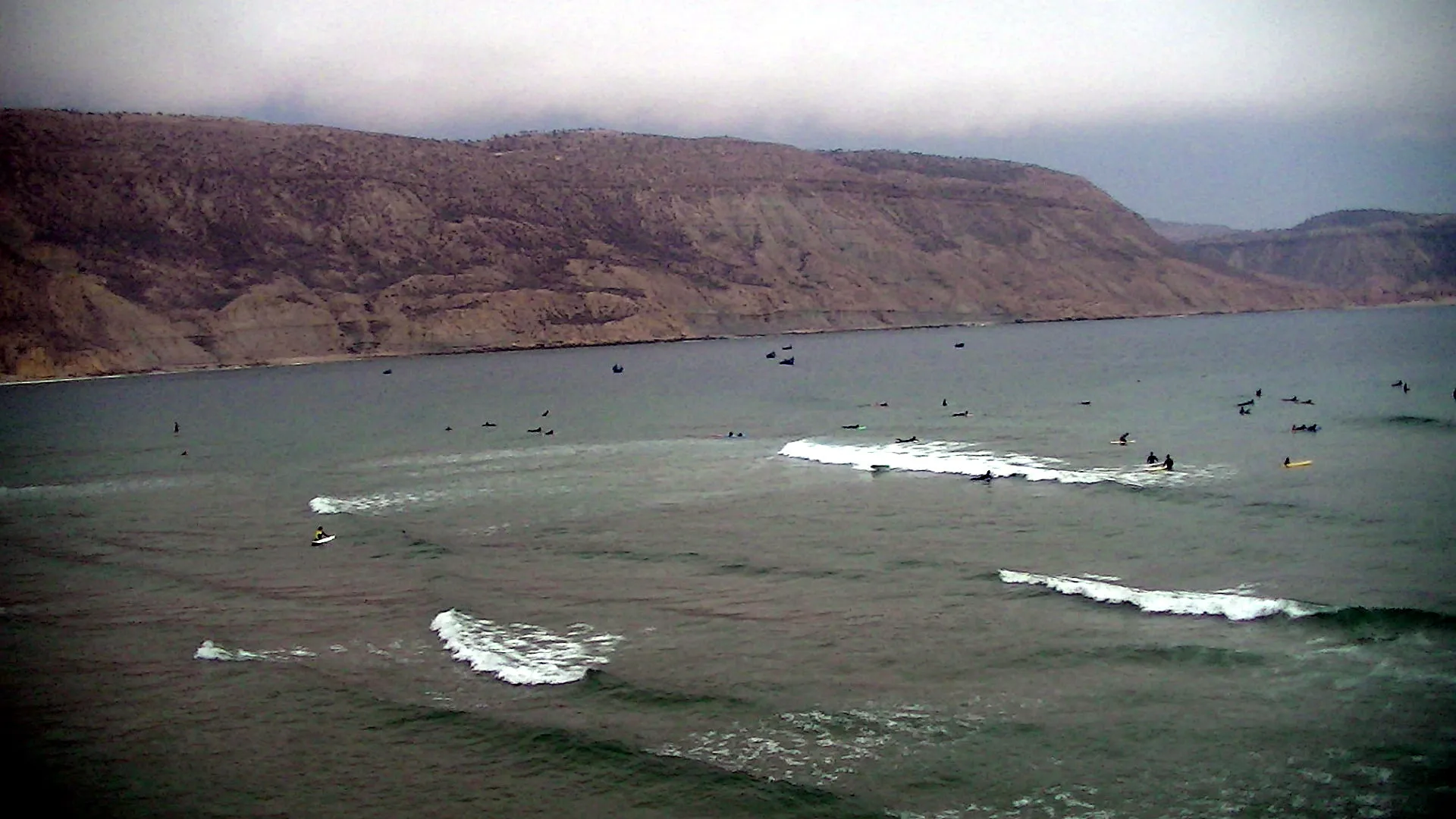
- It depends on the spot and the week. On Anchor Point in November, expect 30–60 surfers at the peak; during Christmas week through 2 January, the count can hit 120–150. Hash Point and Killer are roomier (15–40 surfers). Banana Beach, being 1.5 km long, stays usable even with 100 surfers because the peaks spread out.
- Do you need a wetsuit in Taghazout?
- Yes from November to April (a 3/2 mm is ideal, 4/3 mm for long morning sessions), water 17–20 °C. From May to October, water 20–24 °C — a long-sleeve rashguard or a 2 mm shorty is enough. Many regulars surf in boardshorts from April onward. Surf camps supply wetsuits in 90 % of cases — confirm at booking.