When to surf Morocco: a month-by-month season guide
Month by month — swell, wind, water, crowds, level. The complete guide to Morocco's surf season for planning a trip between Taghazout and Imsouane.
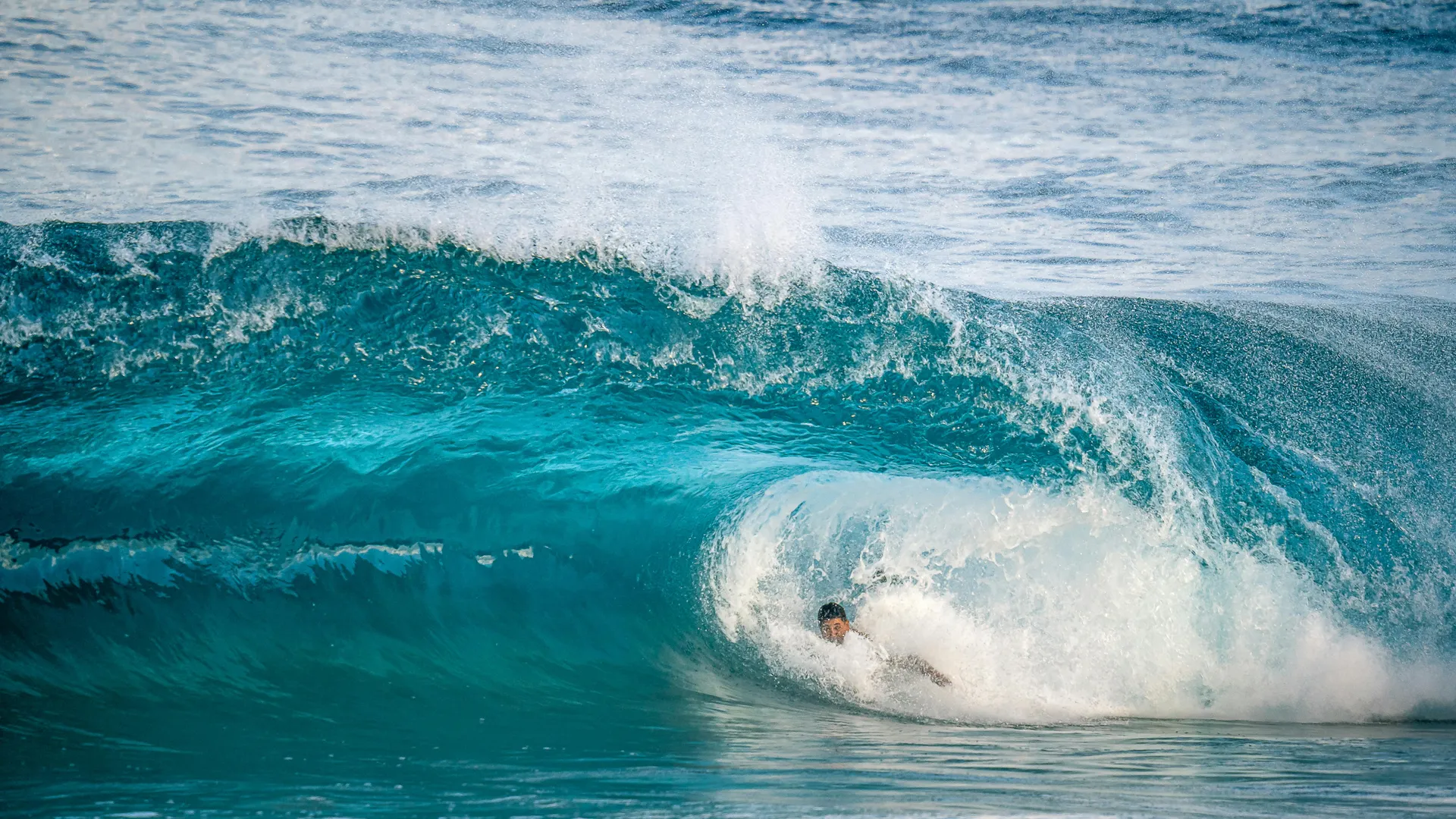
Morocco’s Atlantic coast offers one of the most reliable surf windows in the Europe–Africa region — but it is a seasonal coast, and each month between September and April offers a slightly different trade-off between swell, wind, crowds and overall experience. Understanding that seasonality means choosing the right month for your level and the kind of trip you want — rather than landing at random on a week that’s too empty, too packed, or too flat.
This guide breaks Morocco’s surf season down month by month, with the variables that matter: average swell size, wind direction, water temperature, recommended level, and crowd density on the key spots.
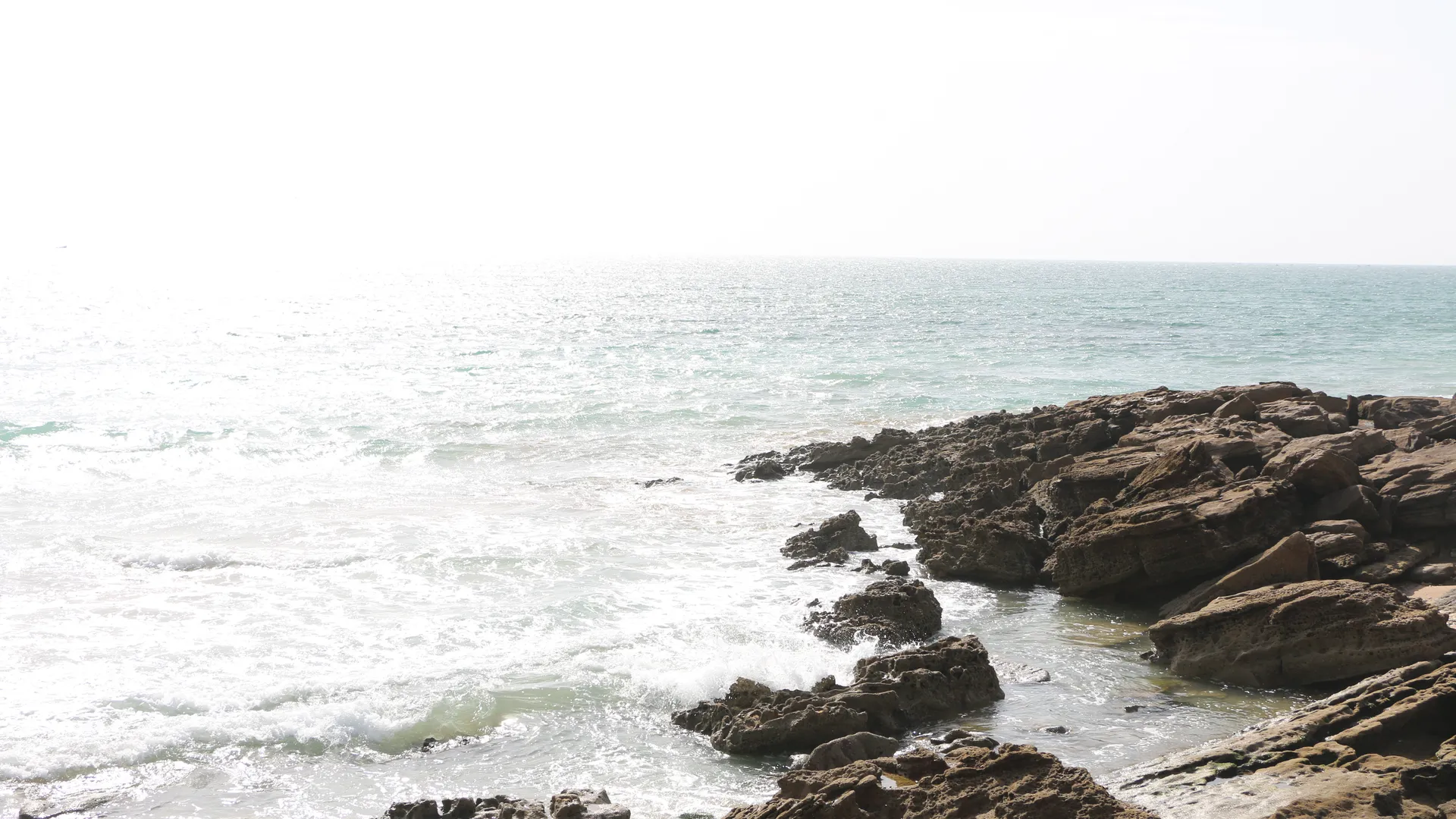
The big picture: September–April, peaking November–February
Morocco’s surf season is shaped entirely by the Atlantic depression cycle that spins up off Iceland and Newfoundland between autumn and spring. These storms generate north-west swells that travel 2,000 to 5,000 km before unloading on the rocky points of Morocco — Anchor Point, Killer, Imsouane, Tamraght.
Summer (June–August) produces almost no useful swell — the Azores High dominates, depressions are rare, and the daily thermal northerly distorts whatever waves do arrive. That’s the flat season in the strict sense.
| Period | Average swell | Dominant wind | Water | Ideal level |
|---|---|---|---|---|
| September | 0.8–1.5 m | Moderate N | 22 °C | All levels |
| October | 1.2–2 m | NE / E offshore | 20 °C | All levels |
| November | 1.5–2.5 m | E offshore | 19 °C | Intermediate+ |
| December | 1.8–3 m | E offshore | 18 °C | Intermediate–advanced |
| January | 2–3 m | E offshore | 17 °C | Advanced |
| February | 1.8–2.8 m | NE / variable | 17 °C | Intermediate–advanced |
| March | 1.5–2.5 m | NE / variable | 18 °C | All levels |
| April | 1–2 m | N / NE | 19 °C | Beginner–intermediate |
| May–August | 0.5–1.2 m | N onshore | 22 °C | Beginner / longboard |
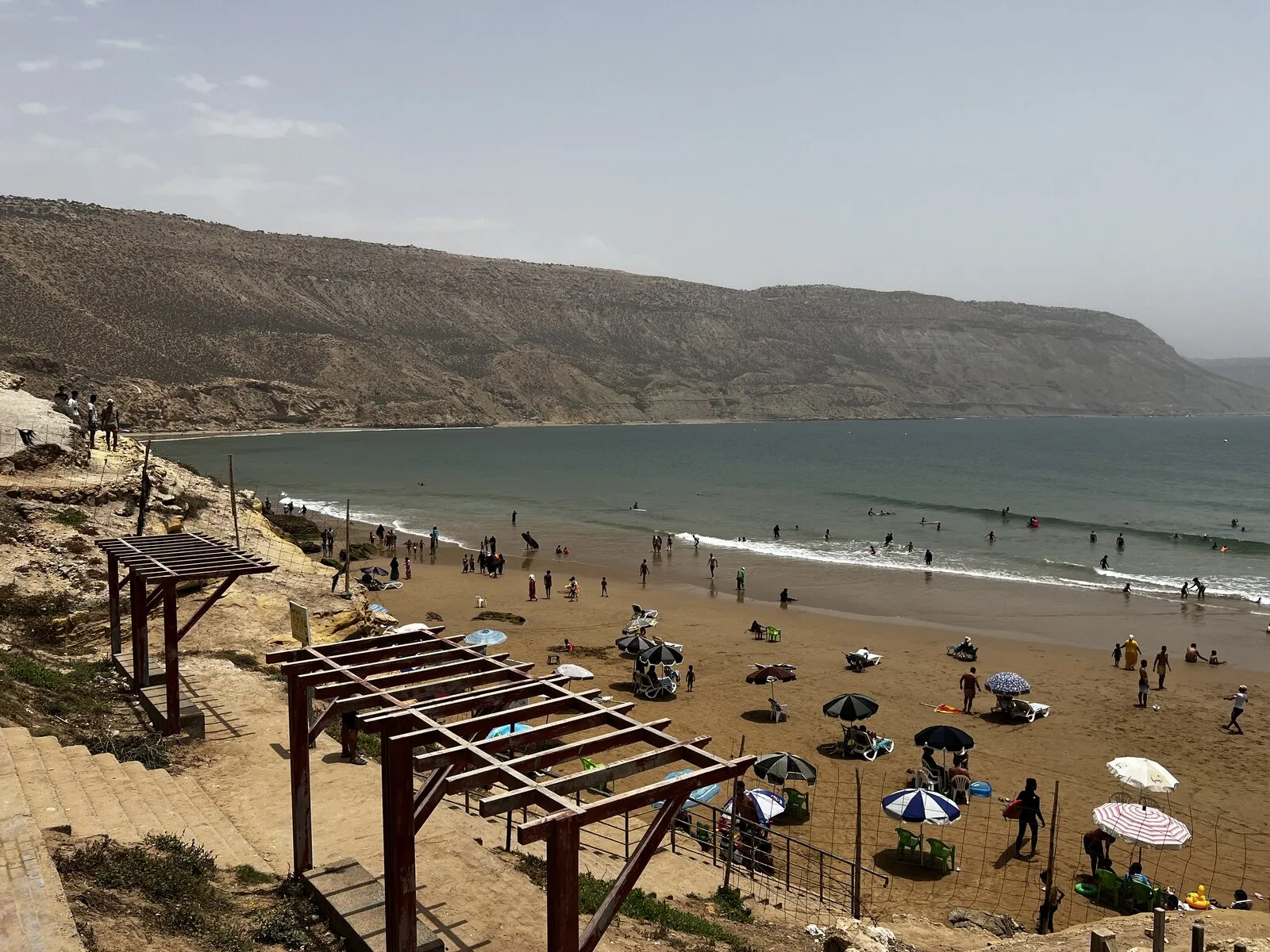
Month by month: what to expect
September — the quiet reopening
The season restarts. The first Atlantic depressions arrive, but the swells stay modest (1–1.5 m typically). The northerly wind hasn’t fully retreated. Many spots are half-awake — Banana Beach runs well, Anchor Point still asks for patience.
Ideal for: beginners, intermediates getting back on the board, travellers who want to dodge the crowds. Avoid if: you’re chasing big point-break sessions.
October — the first real window
The month the season “really starts”. The northerlies fade out, the first proper swells arrive. Anchor Point begins to fire on an interesting level. Water still warm (20 °C). Plenty of European travellers come this month — the perfect shoulder season.
Ideal for: all levels, especially intermediates looking for their first good session at Anchor.
November — the sweet-spot month
Probably the best month of the season for the quality-to-crowd ratio. Consistent swells (1.8–2.5 m), easterly offshore most mornings, water still at 19 °C, and the December holiday surge hasn’t kicked in. It’s also the month when surf camps are full but not saturated.
Ideal for: solid intermediates and advanced surfers who want to maximise Anchor + Imsouane sessions.
December — high season begins
Swells reach their winter level (2–3 m on a regular basis), the easterly offshore stabilises, and the water drops to 18 °C. A 3/2 mm wetsuit becomes mandatory for most. The final week of the month (European school holidays) brings heavy density on every spot — surf camp bookings should be made 8–12 weeks ahead.
Ideal for: intermediates to advanced chasing the bigger sessions and willing to accept the crowd.
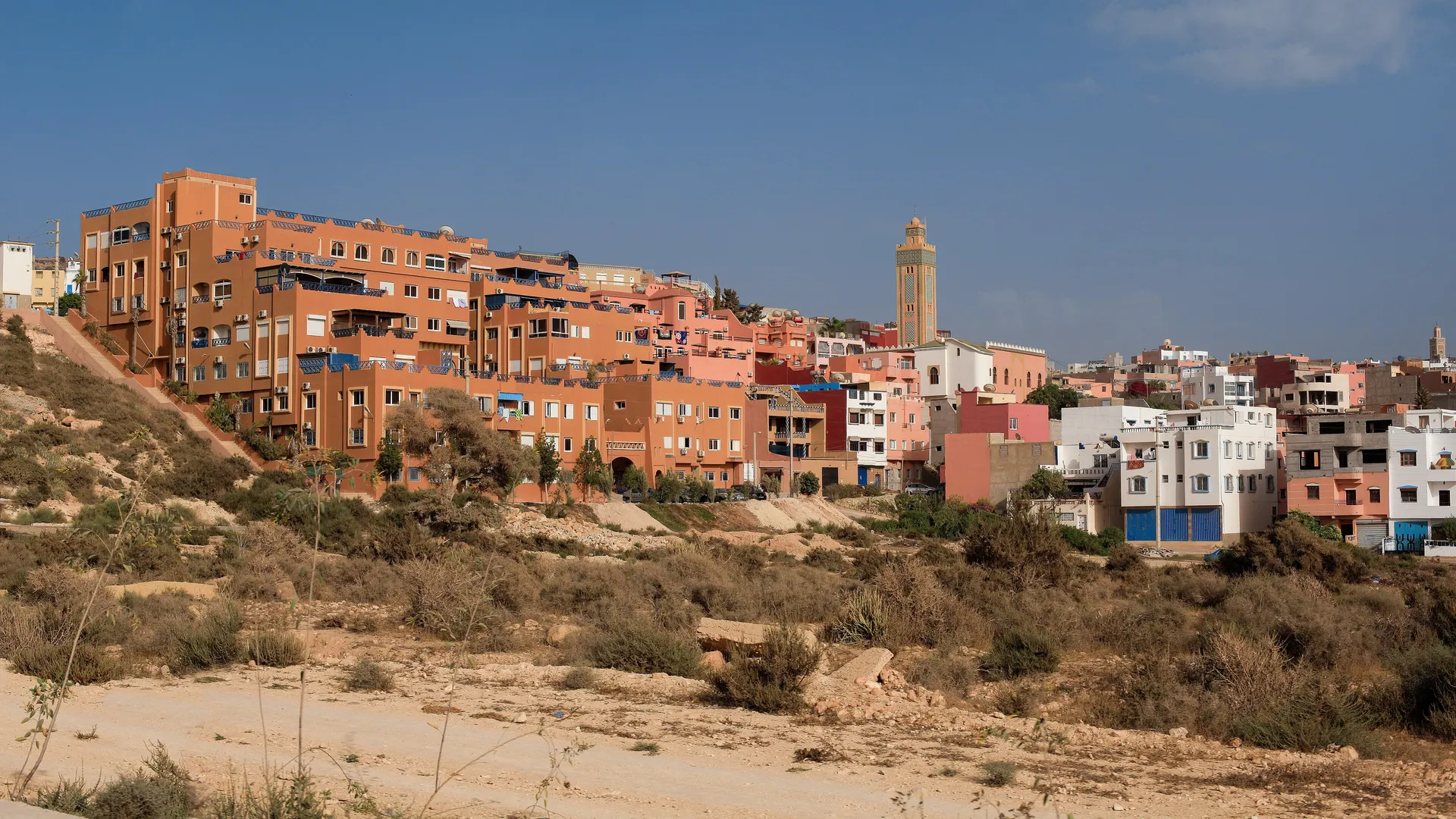
January — the absolute peak
The month of the biggest swells (up to 4 m, well shaped), the coldest water (17 °C), and maximum surfer density on Anchor Point. Almost every day is surfable on at least one spot along the coast. Recommended level: advanced minimum on the classic points; intermediates fall back on Imsouane and Banana Beach.
Ideal for: advanced and expert surfers with 5+ years on the board. Worth knowing: the crowd on Anchor Point can reach 100–150 surfers at the peak on the best days.
February — the strong second half
Very similar to January but with noticeably fewer surfers in the water (school holiday weeks aside). The swells stay big, the water still 17 °C, the wind variable. A lot of experienced surfers consider February their favourite month: January-grade swell without the January density.
Ideal for: solid intermediates and advanced surfers chasing winter conditions without the January pressure.
March — the soft transition
The season starts to mellow. Swells stay consistent (1.5–2.5 m) but with more small days mixed in. Variable wind, the occasional northerly onshore creeping back. Water climbs to 18 °C. An excellent month for intermediates in progression — enough swell to work on, not so much it overwhelms.
Ideal for: intermediates, longboarders, travellers wanting to skip the winter peak.
April — the close of the season
The tail end. Swells get rarer and smaller (1–2 m), the northerly wind more present, but the days are warm and the crowds thin. Still very surfable, especially for beginners through intermediates.
Ideal for: beginners, longboarders, relaxed learn-to-surf trips.
May to August — the flat season
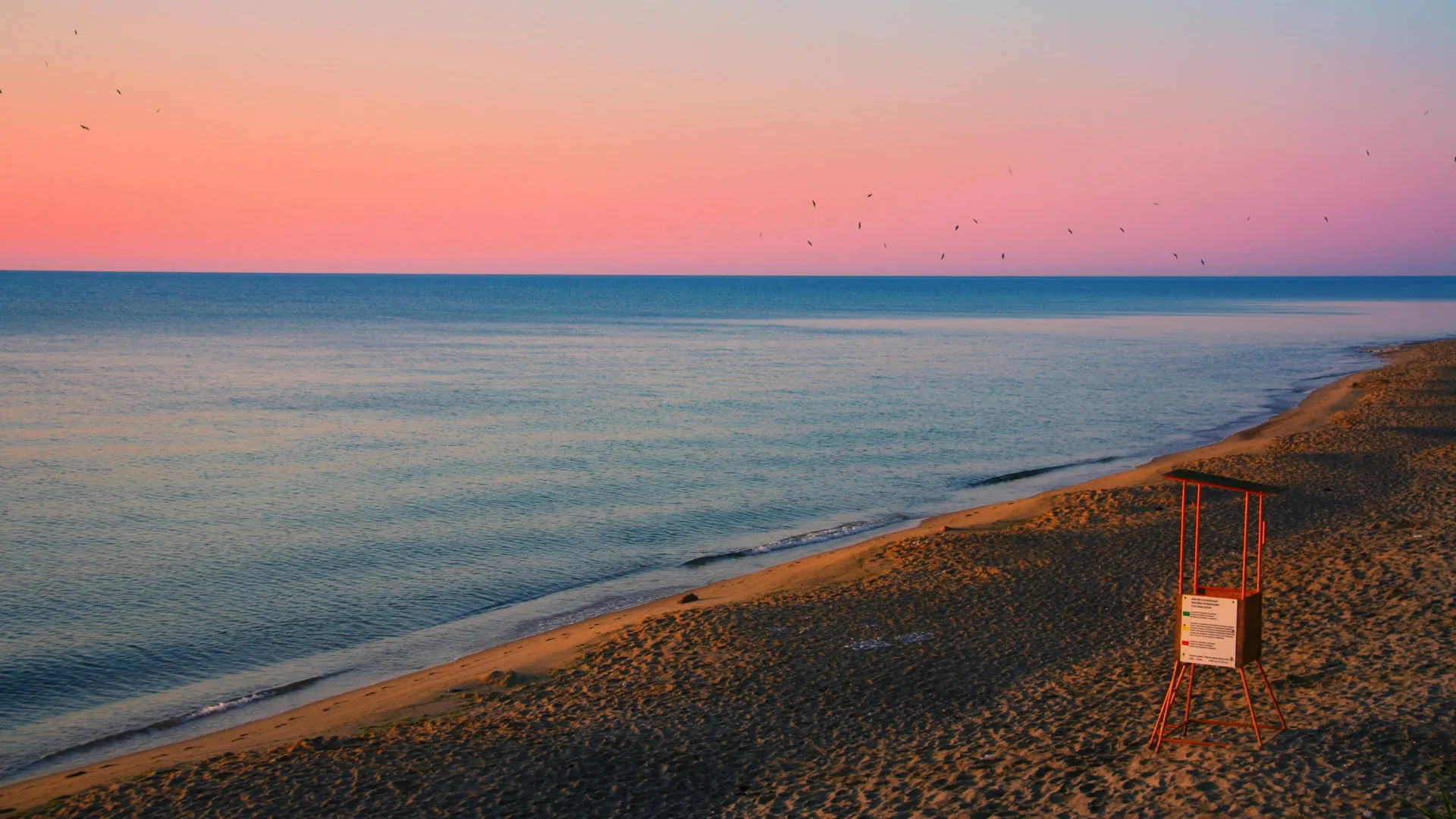
Surfing becomes incidental. Steady northerly wind, rare swell. The beach breaks at Banana Beach and Imsouane South Beach keep working for beginner levels. The classic points are flat. Water at 22–24 °C, no wetsuit needed.
For whom: complete beginners, longboarders, trips that combine soft surf with cultural travel (Marrakech, Essaouira, the Atlas).
What to do on the flat days
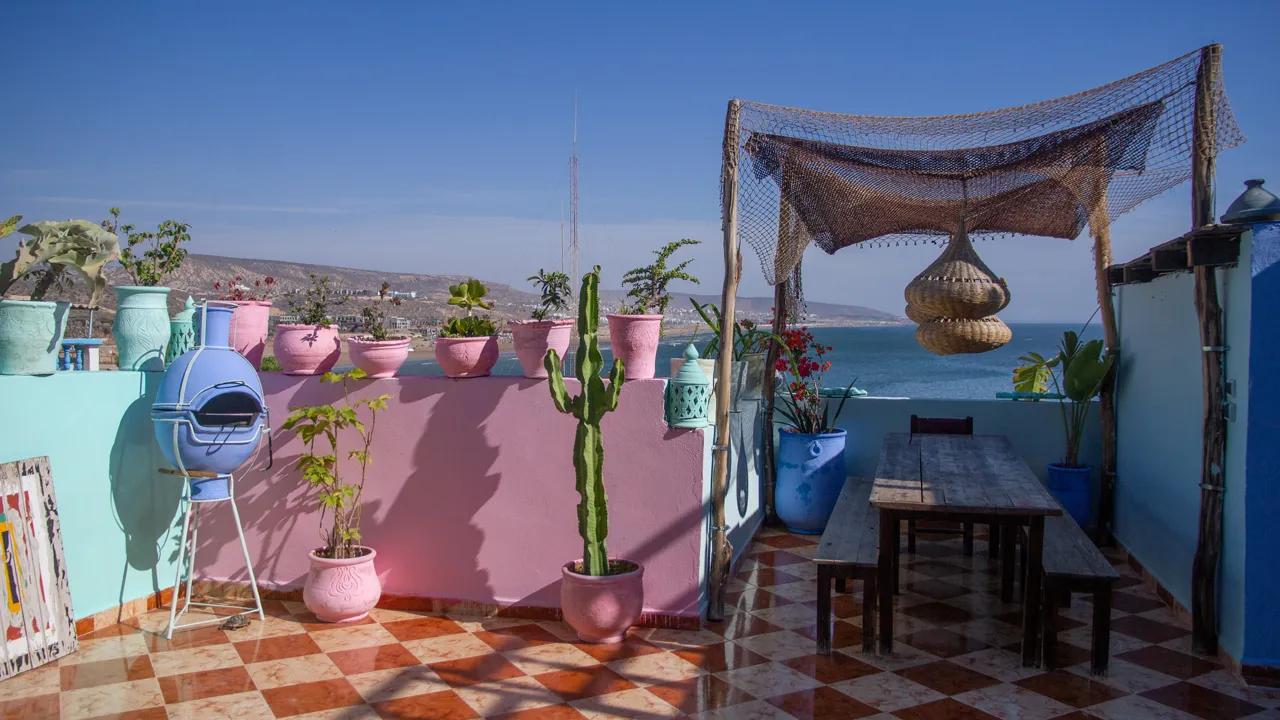
Even in high season, 1–2 days a week can come up flat or messy. A few ways not to write off the day:
- Imsouane South Beach almost always works on conditions where Taghazout doesn’t — a beach break with a forgiving sandy bottom.
- Devil’s Rock at Tamraght fires on the small swells the other spots ignore.
- Paradise Valley — gorges and natural pools 30 minutes inland, swimming in clear rock basins.
- Essaouira — UNESCO medina, fish market, Portuguese fortifications. 2 hours’ drive north.
- Marrakech — 2 h 30 by motorway. Good for a day trip: souk plus a riad lunch and back.
- Day trip to Massa or Sidi Ifni in the south — nature reserves, dunes, remote spots.
Booking your trip: recommended timing
Given how tight the calendar is (the good months are concentrated between November and February), surf camp and flight booking pressure shifts a lot through the year:
| Period | Book ahead | Density |
|---|---|---|
| September–October | 3–4 weeks | Moderate |
| November | 6–8 weeks | High |
| December (non-holiday) | 6–8 weeks | High |
| Christmas holidays | 3–4 months | Saturated |
| January (post first week) | 6–8 weeks | High |
| February (school holidays) | 2–3 months | High |
| March–April | 3–4 weeks | Moderate |
| May–August | 1–2 weeks | Low |
In short: choose your month by your profile
- Complete beginner → September, March, April, May, October. Smaller waves, schools available, manageable crowds.
- Intermediate in progression → October, November, March for the quality-to-crowd balance.
- Solid intermediate → November, February. Good swell, none of the January density.
- Advanced / expert → December, January. The biggest swells of the season.
- Trip combining surf with something else (yoga, family, golf) → October, November, March, April. Active surf season, but pleasant weather for everything else too.
For the Taghazout-specific read (Anchor Point crowds, best booking week, spot-by-spot month-by-month), see the when to surf Taghazout guide. To match each month to the spots you should aim at, see our complete guide to Morocco’s surf spots. To prepare the arrival logistics, see the Agadir airport → Taghazout guide.
FAQ
- What is the best month to surf Morocco?
- For the combination of consistent swell, offshore wind and manageable crowds, the best month is probably November. The Atlantic depressions are already firing, the northerly winds have eased off, the water is still around 20 °C, and the holiday rush hasn't pushed the surfer count to its peak. December and February come close behind, with slightly cooler water (17–18 °C).
- Can you surf in Morocco in summer?
- Yes, but the season is far less rewarding. From June to August, north-west swells are rare, northerly winds blow daily, and most point breaks (Anchor, Killer) sit flat or messy. The beach breaks (Banana Beach, Imsouane South Beach) stay surfable for beginners and longboarders. The water climbs to 22–24 °C, no wetsuit needed.
- What water temperature should you expect in winter at Taghazout?
- Between 17 and 19 °C from December to February. A 3/2 mm wetsuit is ideal for most surfers; some prefer a 4/3 mm for long morning sessions. Air temperature runs around 18–24 °C during the day and drops to 10–14 °C at night — pack a fleece for the evenings.
- How many swell days can you expect in high season?
- An average of 5–6 surfable days a week between November and February along the Taghazout–Imsouane coast. Atlantic depressions roll through one to two days apart, and even on days without a big swell, the beach breaks and softer points keep working. Statistically the most consistent winter coast in the Europe–Africa window.
- When is it best to avoid Morocco for surfing?
- July and August for consistency (rare swells, strong winds), and the final week of December plus the first of January for crowds (Christmas–New Year on Anchor Point can hit 150 surfers at the peak). If you want to dodge both bad conditions and heavy crowds, aim for November or the second half of February.