Tamraght: The Surf-Yoga Village Next Door to Taghazout
Five km south of Taghazout, Tamraght is quieter, greener and tuned to surf-yoga. Banana Beach, Devil's Rock, where to stay and how to get there from Agadir.
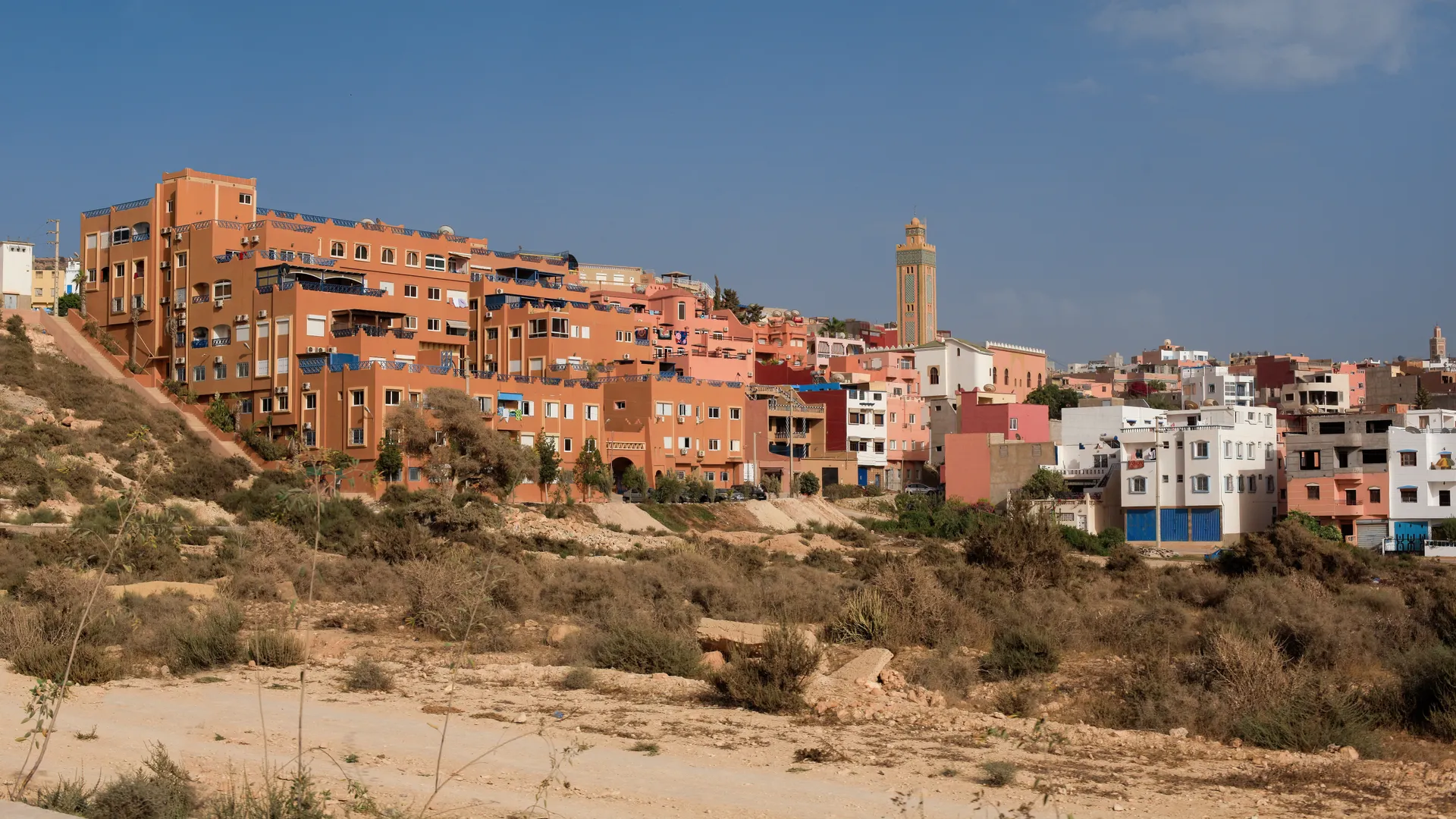
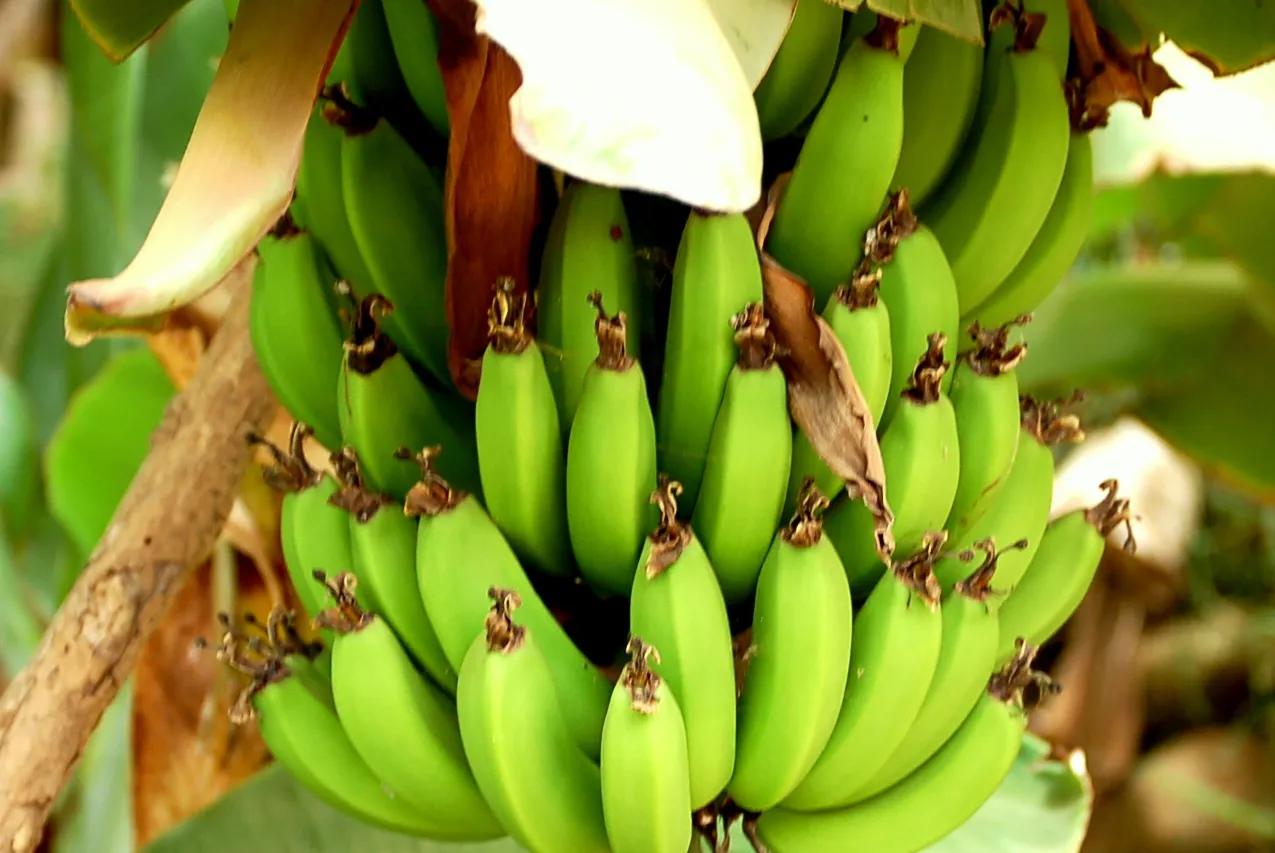
Five kilometres south of Taghazout, Tamraght is what the seasoned traveller often ends up preferring: the same coast, the same waves, but with half the crowd and more banana groves than board shops. The village grew up straddling the P8 and the Oued Tamraght (Tamraght river), which gives it greenery that’s rare on this dry stretch of the Moroccan coast — palms, fruit trees, and the famous banana plantations that drop down to the beach and gave it its nickname: Banana Village.
This guide covers what to know before dropping your board at Tamraght rather than Taghazout or Imsouane: where the village sits, which spots it gives access to, where to stay and eat, and why a growing number of surfers choose to base a whole week here.
Distance from Tamraght to Taghazout
Tamraght sits 5 km south of Taghazout — about 8 minutes by car on the P8, the coast road that links Agadir to Essaouira. Plan on 20 minutes by bike, or just over an hour on foot along the clifftop path. Shared grands taxis run between the two villages all day for 10 MAD, and most surf camps on either side run their own shuttles to chase the day’s wave. In practice, staying in Tamraght gives you full access to Taghazout’s spots (Anchor Point, Hash Point, Killer) with no real logistics penalty. For full village-to-village distances and the transport breakdown, see our guide to distances between Agadir, Tamraght and Taghazout.
Geography: a village straddling the river
Tamraght is administratively part of the Aourir commune — which is why you’ll sometimes hear Tamraght and Banana Village used interchangeably. The village stretches along the P8, on the north bank of the Tamraght river that runs down from the Atlas to the Atlantic. That freshwater explains the vegetation: banana trees, mango trees, palms — a contrast with the much drier surrounding villages.
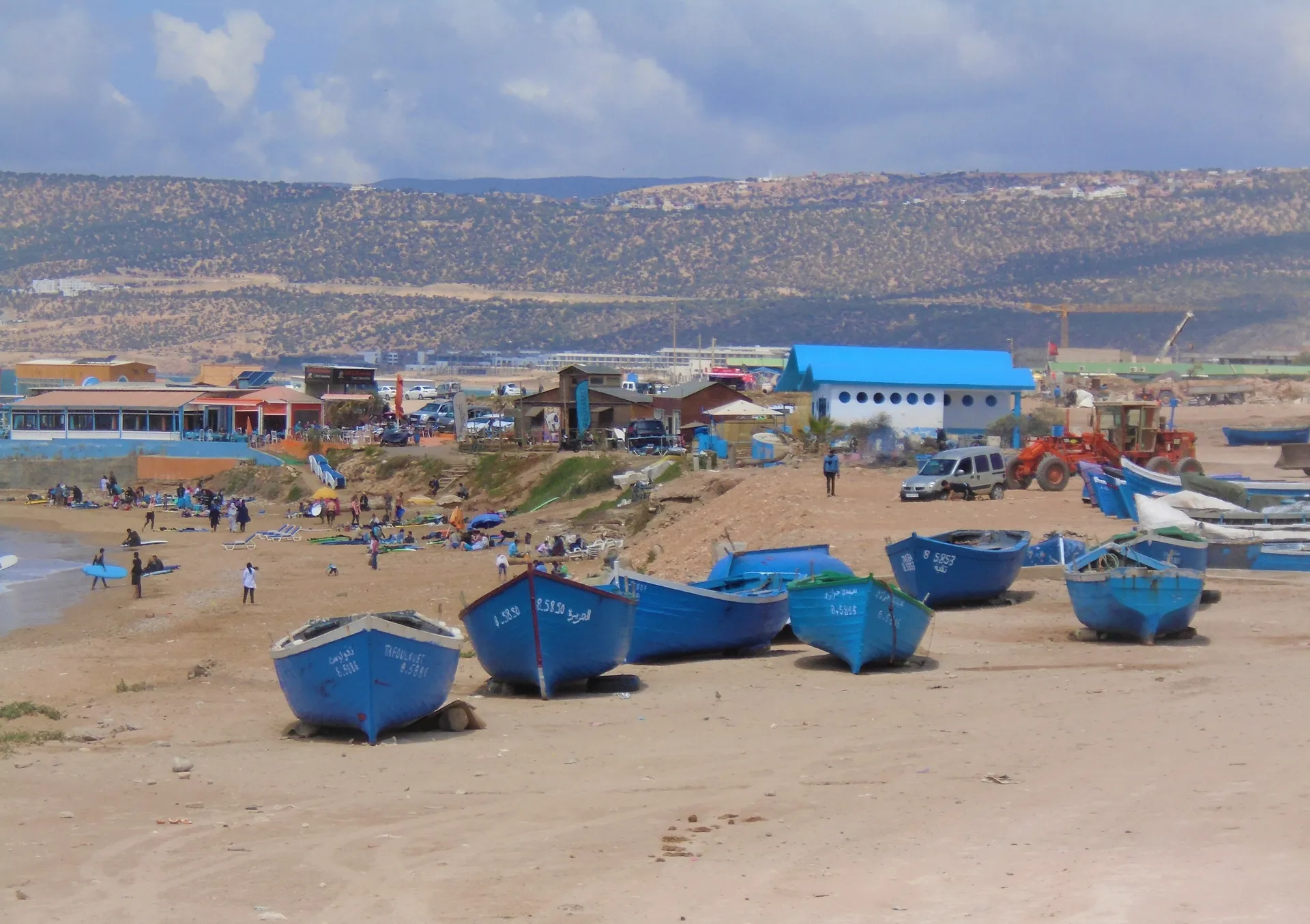
Tamraght’s beach, better known as Banana Beach, runs 1.5 km north of the village. At the northern end, a small rocky headland marks the boundary with Aourir-Plage; to the south, the river mouth separates Tamraght from the cliffs that climb back up to Taghazout.
The surf spots accessible from Tamraght
Tamraght shares most of the surfable zone with Taghazout — but basing yourself here puts three spots on foot or by bike, with the others a ten-minute drive away.
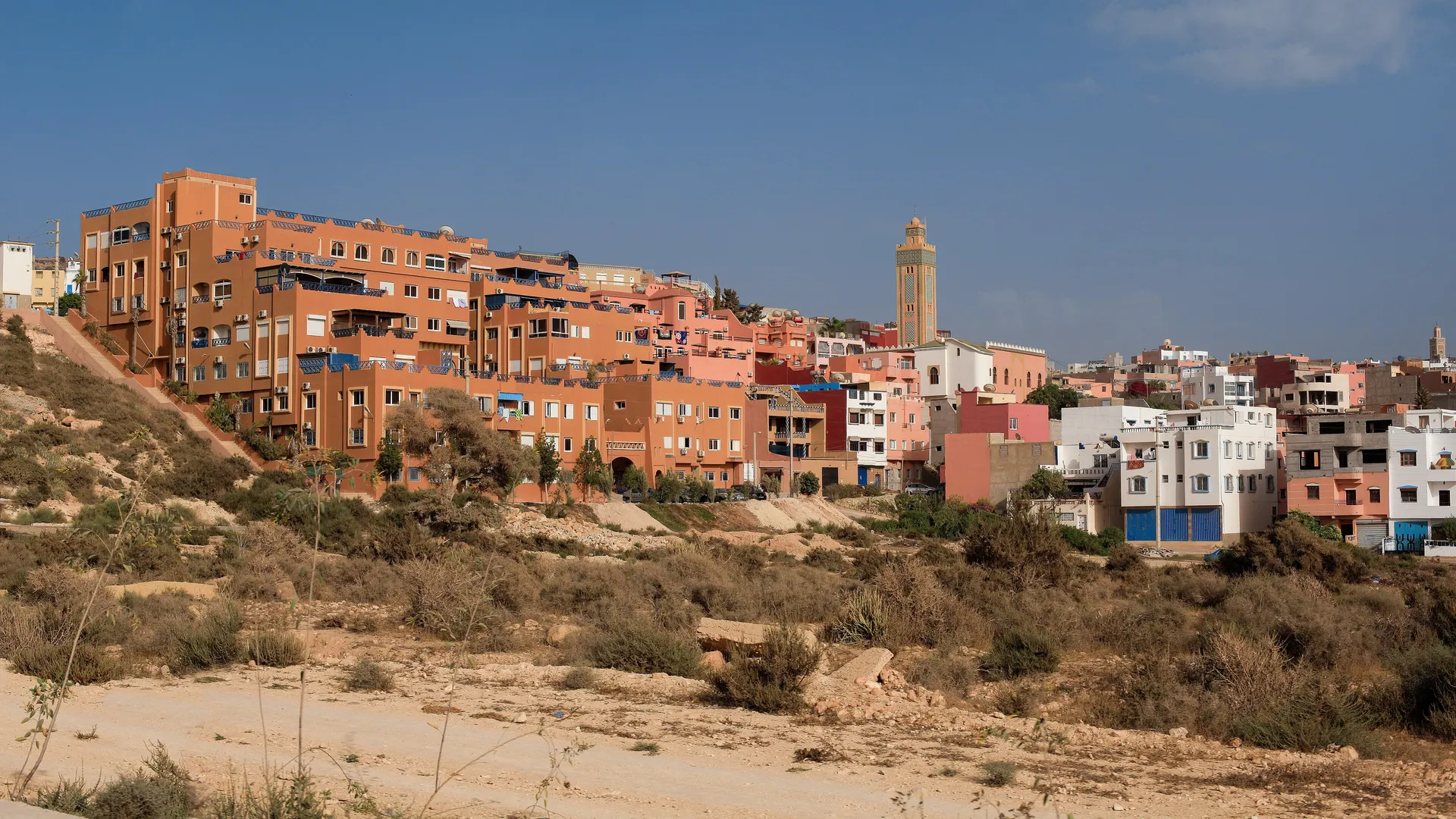
Banana Beach — the 1.5 km beach break
This is Tamraght’s signature spot, and arguably the best beach break between Agadir and Essaouira. The beach faces due west, the bottom is all sand, and the length of the surfable zone (1.5 km) lets the peaks spread out even on a high-season Sunday. The September-to-May swell produces readable waves, neither hollow nor mushy, in a 0.8–2 m range where schools can work green waves without risking their students.
Who it’s for: progressing beginners, intermediates, longboarders. Above 2.5 m of swell, the beach gets big and messy — better to switch over to Anchor Point.
Devil’s Rock — the mini-point for small swells
At the south end of Banana Beach, Devil’s Rock is a small rocky headland that creates a mini point break. What makes it interesting: it works on swells too small for Anchor Point (from 0.6 m), making it the go-to option on flat days. The wave is short (30–50 metres), a right-hander, and the take-off happens right next to the rocks — so intermediate level minimum, ideally at mid-to-high tide to limit exposure to the bottom.
Quick access to Hash Point and Anchor Point
From Tamraght, Hash Point is 3 km north (5 min by car, 30 min on foot along the cliff). Anchor Point is 4 km. Killer Point is 5 km. Boilers is 12 km. In practice: you sleep in Tamraght, then take the car or a shared taxi (10–15 MAD) to chase the wave of the day. See the full guide to Morocco’s surf spots for the season-swell-level table.
The vibe: why come to Tamraght rather than Taghazout
Three things set Tamraght apart from Taghazout — not better or worse, just different.
Density. Taghazout holds dozens of shops, restaurants and cafés lined up along two or three streets. Tamraght is more spread out, more open, and keeps a village rhythm. Less organised tourist circuit, more terrace cafés right on the sand.
The relationship to yoga and wellness. Tamraght concentrates most of the area’s surf-yoga retreats: yoga studios with ocean views, 7-day vegan retreats, meditation workshops, breathwork sessions. If you’re travelling as a couple and one of you doesn’t surf, Tamraght is probably the better pick.
Vegetation. The Tamraght river makes market-garden agriculture possible, and you taste that directly in the village restaurants — local bananas, mangoes, figs, citrus. Taghazout has no water; Imsouane likewise. Tamraght is the only one of the three villages where you can take your morning coffee under a palm tree that actually grew there.
Where to stay in Tamraght
The offer breaks down into three distinct categories — each with its own logic.
Surf-yoga retreats — the category that built Tamraght’s reputation. Standard package: 5–7 nights, half-board, 2 guided surf sessions per day plus a morning yoga class. Rate 400–800 EUR per week. Surf Maroc, Surf Berbere Yoga, Wave Riders, Munga Guesthouse are the references. Book 8–12 weeks ahead for January-February.
Classic surf camps — less yoga, more pure surf. Rate 350–550 EUR per week. Shared or private rooms, transfers from Agadir included, boards and wetsuits provided.
Independent rentals — Airbnb apartments and villas at 35–90 EUR per night. The option for a long stay (3+ weeks) or a family trip. Equipped kitchen, access to the morning souk in Aourir, weekly board rental from the village shops (300–500 MAD per week).
Eating in Tamraght: between healthy bowls and tagine
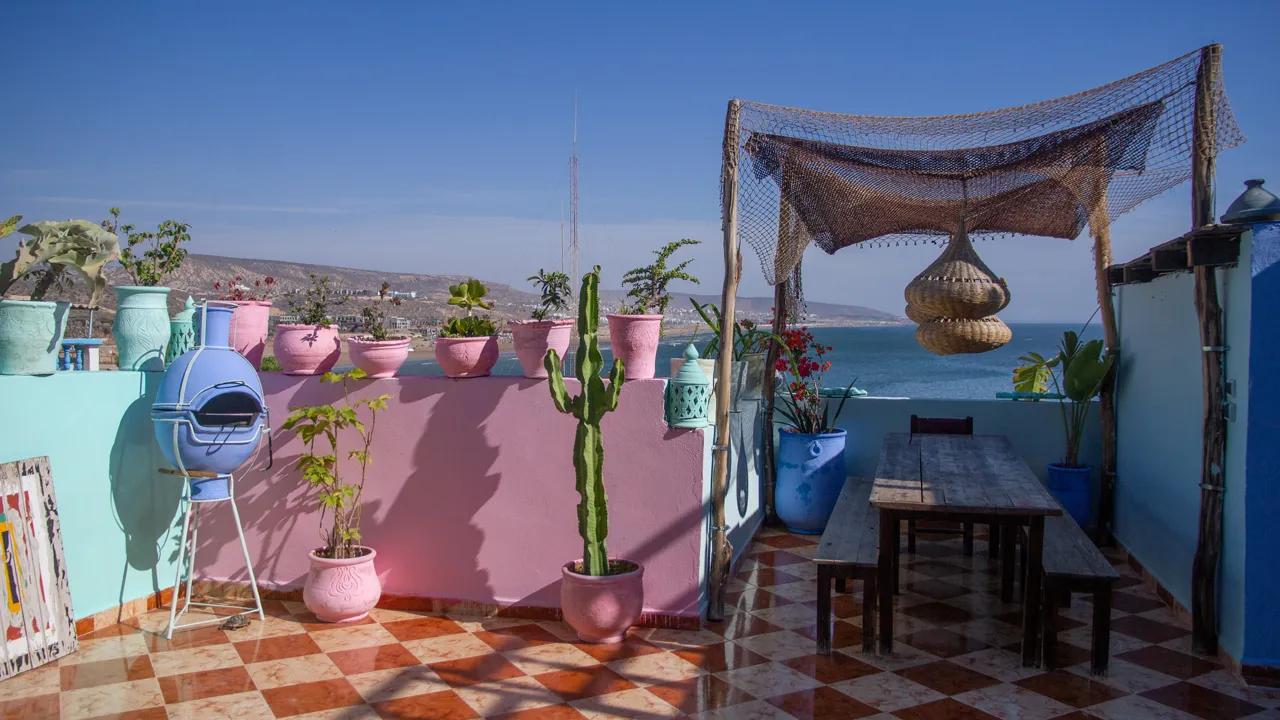
Tamraght doesn’t have Taghazout’s restaurant range, but what it does have is coherent: local cooking plus a healthy/plant-based offer. In the morning, bowls (acai, granola, fruit) and pancakes rule the terrace cafés on the seafront. At lunch, mixed salads or a lighter tagine. In the evening, the choice widens: wood-fired pizzas, grilled fish, more traditional tagines.
Names that keep coming up: Café Mouja (beach terrace, breakfast), Banana House (international food and DJ nights), Café Maelys (ocean view, brunch).
Worth noting: the Sunday morning souk in Aourir (4 km south) is worth a visit even without buying anything — fruit, vegetables, spices, pottery, and the souk atmosphere before the heat builds.
Tamraght vs Taghazout vs Imsouane: decision table
| Criterion | Tamraght | Taghazout | Imsouane |
|---|---|---|---|
| Distance from Agadir airport | 35 km / 45 min | 40 km / 50 min | 95 km / 1 h 30 |
| Signature spot | Banana Beach | Anchor Point | Cathedral Bay |
| Ideal level | Beginner–intermediate | Intermediate–advanced | Beginner + solid intermediate+ |
| Nightlife | Very quiet | Low-key, a few bars | Practically none |
| Yoga / wellness | Max concentration | Moderate | Low |
| For a non-surfer | Very good | Decent | Few options |
| Spot density | Banana + Devil’s + Hash/Anchor in 10 min | 6–8 spots within 15 km | 2 bays, 1 truly famous spot |
Logistics: from Agadir Al-Massira airport (AGA)
35 km, around 45 minutes on the P8 (then the Aourir exit). Three options:
- Private taxi airport → Tamraght: 200–300 MAD (20–30 EUR). Agree the fare before leaving.
- Surf camp transfer: almost always included. Confirm before arrival.
- Public bus 32 from central Agadir → Aourir → Tamraght: 7 MAD. Doable but awkward with a board.
- Rental car from the airport: from 250 MAD/day for a city car. Recommended if you plan to move between Tamraght / Taghazout / Imsouane / Paradise Valley.
Recap: the takeaways
- 35 km north of Agadir, 5 km south of Taghazout.
- Spots: Banana Beach (long beach break), Devil’s Rock (mini-point for small swells), quick access to Hash and Anchor.
- Surf-yoga / wellness vibe, greener and quieter than Taghazout.
- Lodging: surf-yoga retreats, classic surf camps, or independent rentals — 35–90 EUR per night.
- Surf season: September to April, like the rest of the coast.
- Pair it with a day in Imsouane and a session at Anchor Point — that’s the classic triangulation of a one-week trip.
To place Tamraght in the wider Moroccan coast and the other spots within reach, see the guide to Morocco’s surf spots or the Imsouane guide.
FAQ
- What's the difference between Tamraght and Taghazout?
- Five kilometres and a different temperament. Taghazout is a former fishing village turned mini-capital of Moroccan surf — denser, more spots, low-key nightlife. Tamraght, just south, is greener (banana groves, river valleys), quieter, more focused on surf-yoga and retreats. Both villages share the same spots — the line between them is administrative, not surf-related.
- Is Banana Beach beginner-friendly?
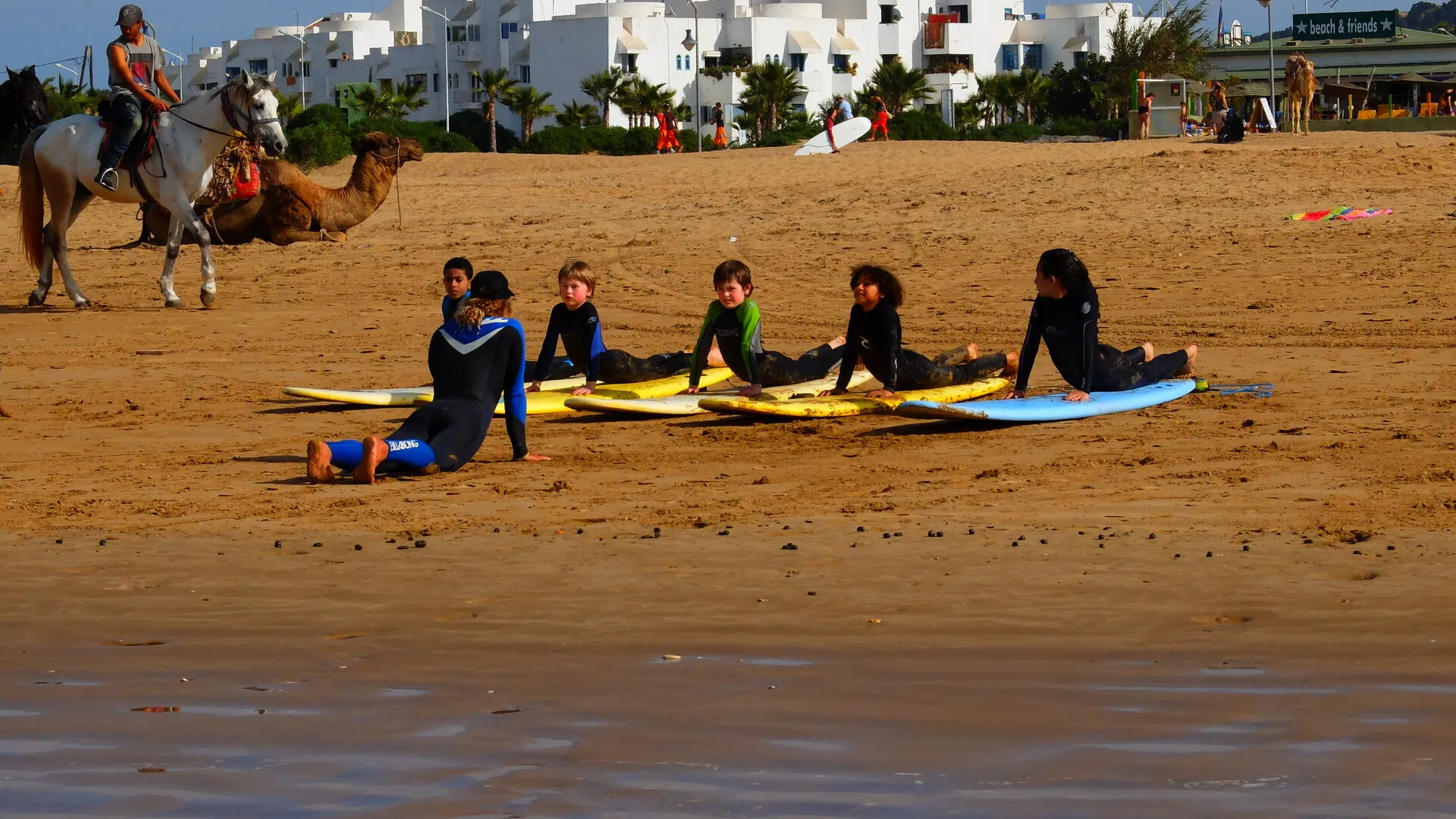
- Yes. It's a 1.5 km sandy beach break with several peaks that spread the crowd, and a soft bottom that forgives wipeouts. Most of Tamraght's schools run lessons here. For stepping up from whitewater to green waves, it's arguably the best compromise between Taghazout and Imsouane.
- How long from Agadir airport to Tamraght?
- About 45 minutes by road, 35 kilometres north of Agadir on the P8. That's 5 minutes closer than Taghazout. Budget 200–300 MAD for a private taxi from the airport, or a transfer often bundled into surf camp packages.
- Is Tamraght cheaper than Taghazout?
- Broadly the same prices. Cost of living is aligned — restaurants 60–150 MAD, surf camps 350–650 EUR per week, Airbnb rentals 30–80 EUR per night. Tamraght can feel a touch more affordable because the offer is more modest (fewer shops, fewer higher-end restaurants), but at equivalent quality the difference is minimal.
- Does Tamraght work for a partner who doesn't surf?
- Better than Taghazout, in fact. The village concentrates most of the area's yoga studios, wellness retreats and vegetarian cafés. Budget 80–150 MAD per yoga class. Paradise Valley (gorges and natural pools, 30 min away) and the Sunday market in Aourir give you content for non-surfing days.