Chicama Alternative: Why Morocco Works for a June Surf Trip
Loved Chicama and looking for the same long-wave, small-crowd, cheap-hostel vibe in June? Honest answer for surfers eyeing Taghazout and Imsouane.
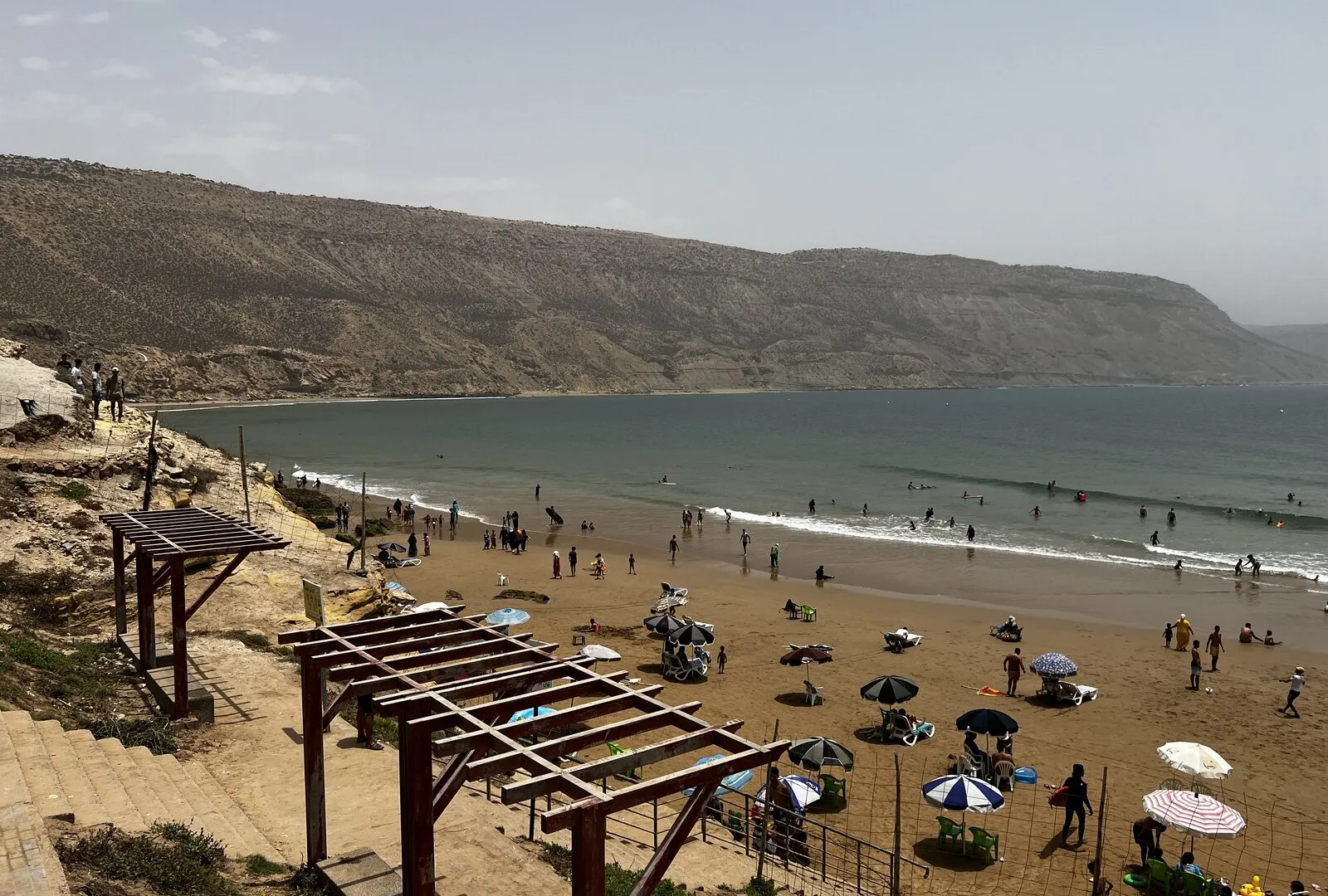
So you scored Chicama two summers ago. I get why you’re chasing the next one — that combo of a working fishing town, a wave that won’t end, and a price tag that lets you stay three weeks instead of one is rare. It’s not a long list of places that deliver all three.
Let’s be upfront before we go further: Morocco is not a left coast. Anchor Point, Killer Point, Boilers, Imsouane’s Cathedral — the headline waves all peel right. So this isn’t a like-for-like swap with Chicama. What Morocco does have is the texture of the trip you described: a small village where the fish market is louder than the bar, dorm beds for €15, a wave that gives you 200 to 600 metres to do something with, and — in June specifically — a crowd count that drops by half compared to winter.
If you can live with riding rights for a couple of weeks, here’s the honest case for Taghazout and Imsouane as your June destination.
The June reality check
A lot of “Morocco in June” posts oversell the surf. Here’s the honest version:
- Swell drops. The North Atlantic groundswells that make Anchor Point legendary are an October-to-March event. June averages 0.6–1.5 m, occasional 2 m pulses from distant south swells.
- Wind flips onshore by afternoon. Mornings are usually glassy, then the alizé — the northerly trade wind — picks up around 11h and turns most exposed beaches choppy by 2 p.m. Dawn patrol becomes a religion.
- Water hits 19–21°C. A 3/2 wetsuit is plenty, a lot of locals are already in spring-suits or boardshorts.
- Crowds thin out. This is the part you’ll like. November–February the lineup at Anchor Point is 40 deep. In June you’re looking at 10–15 surfers, often less.
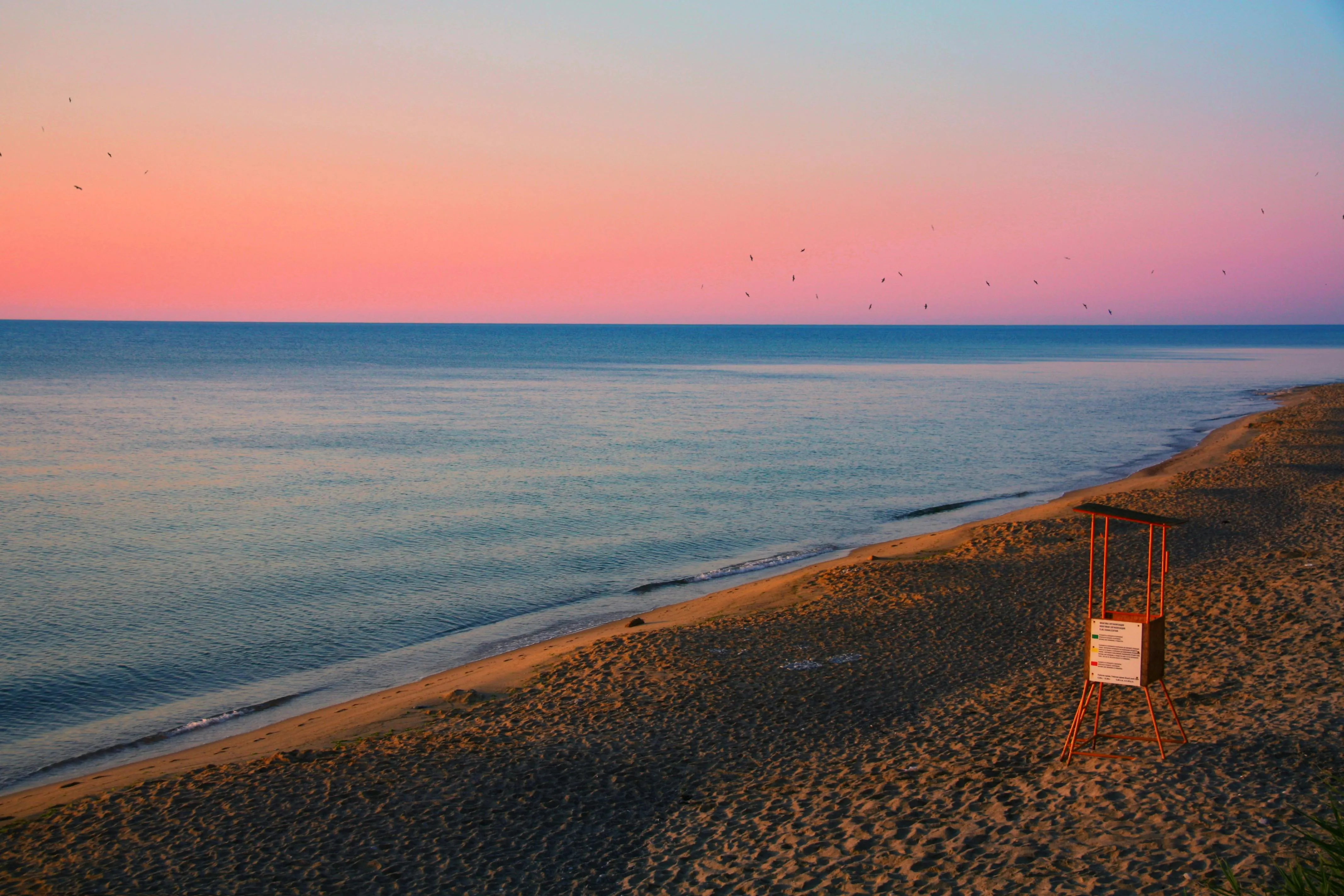
If you came expecting overhead barrels, you’ll be disappointed. If you came expecting “surf my brains out without queueing,” June is actually one of the better months — the surf is small enough that even a four-hour dawn session won’t wreck you.
The Chicama-equivalent wave: Imsouane’s Cathedral
The single wave on this coast that comes closest to the Chicama experience — the length, the slowness, the let-me-work-this-section feel — is the Cathedral in Imsouane, a fishing village 95 km north of Agadir.
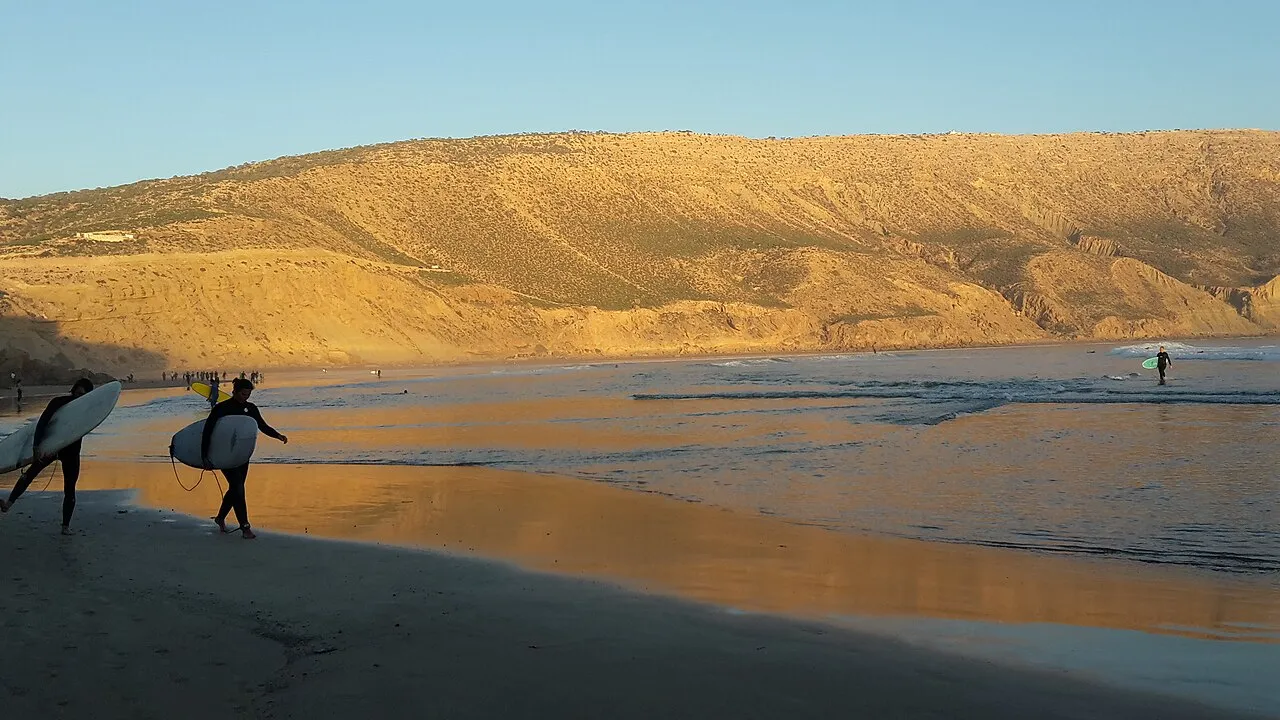
It’s a right. There’s no getting around that. But on a clean north-west swell, the wave breaks off a rocky point at the north end of the bay and peels for 200 to 600 metres along a mixed rock-and-sand bottom that flattens out gradually. The wave is slow, forgiving, almost never hollow. You have time to set up a bottom turn, ride to the next section, throw a cutback, kick out and paddle back without your arms falling off — because the channel runs you straight back to the takeoff.
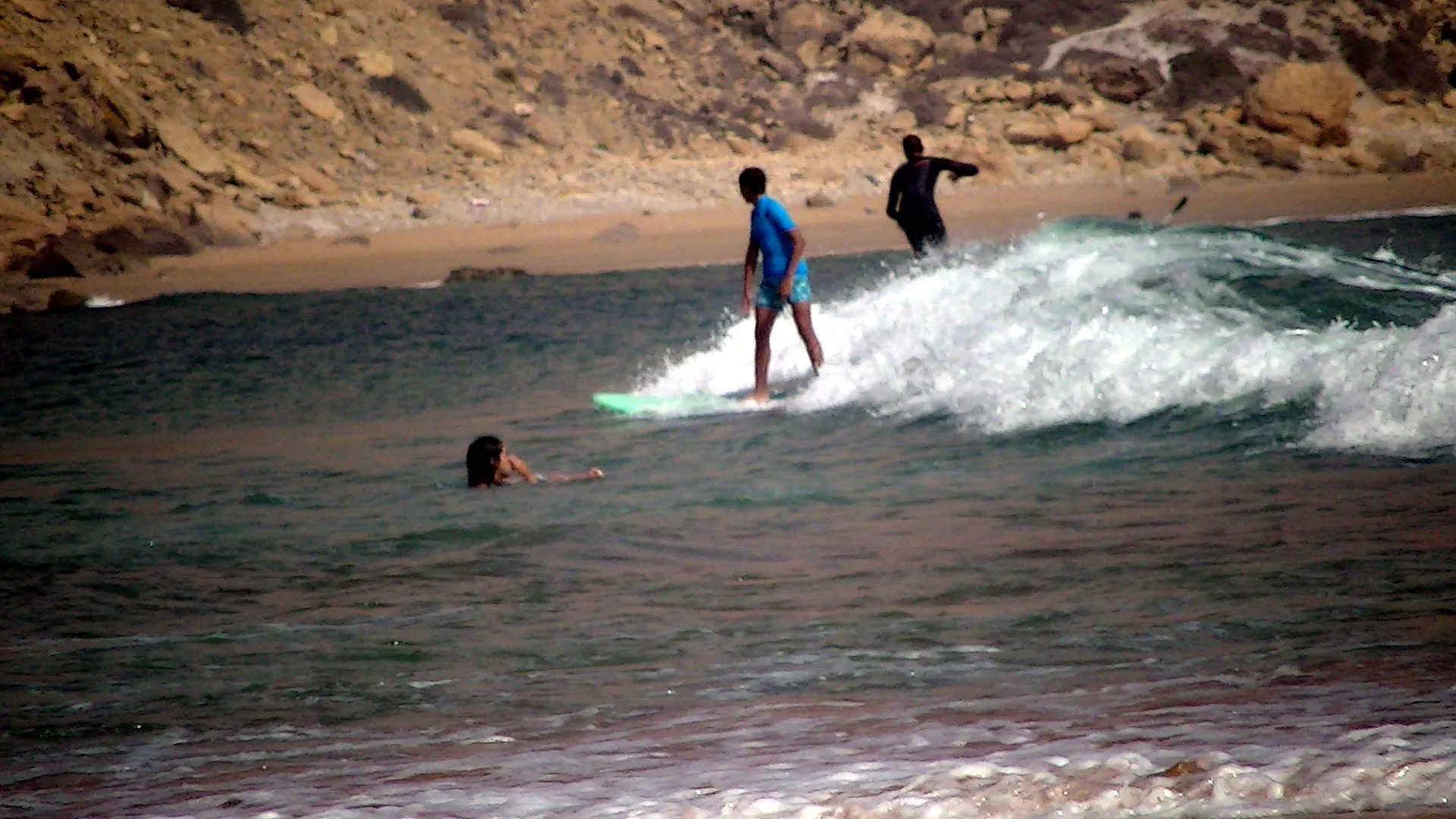
Catch: Imsouane in June is small. The Cathedral works almost year-round but rarely fires above 1 m in summer. You’ll get knee-to-chest-high walls that go forever — a longboarder’s dream — but not the head-high points of winter. If your week aligns with a passing south swell you can luck into something better.
Where you actually stay (and what it costs)
This is where Morocco genuinely wins on the Chicama brief. The cheap-hostel scene is real, not greenwashed.
Tamraght (the cheapest base)
Tamraght is the village 3 km south of Taghazout — half the price, twice as relaxed, and you can walk or hitch to all the same spots.
- Hostel dorm beds: 120–180 MAD/night (~€11–17)
- Private room in a guesthouse: 250–400 MAD/night (~€23–37)
- Surf camp (room + breakfast + 2 sessions + airport pickup): €280–380/week
- Cheap eats: tagine + bread + mint tea at a local spot, 40–60 MAD (~€4–6)
Names that keep coming up for budget travellers: Surf Maroc Auberge, Olo Surf Tamraght, Salty Souls Experience. None of these are paid endorsements — they’re just the places that consistently get mentioned in r/surfing threads.
Taghazout (the lively base)
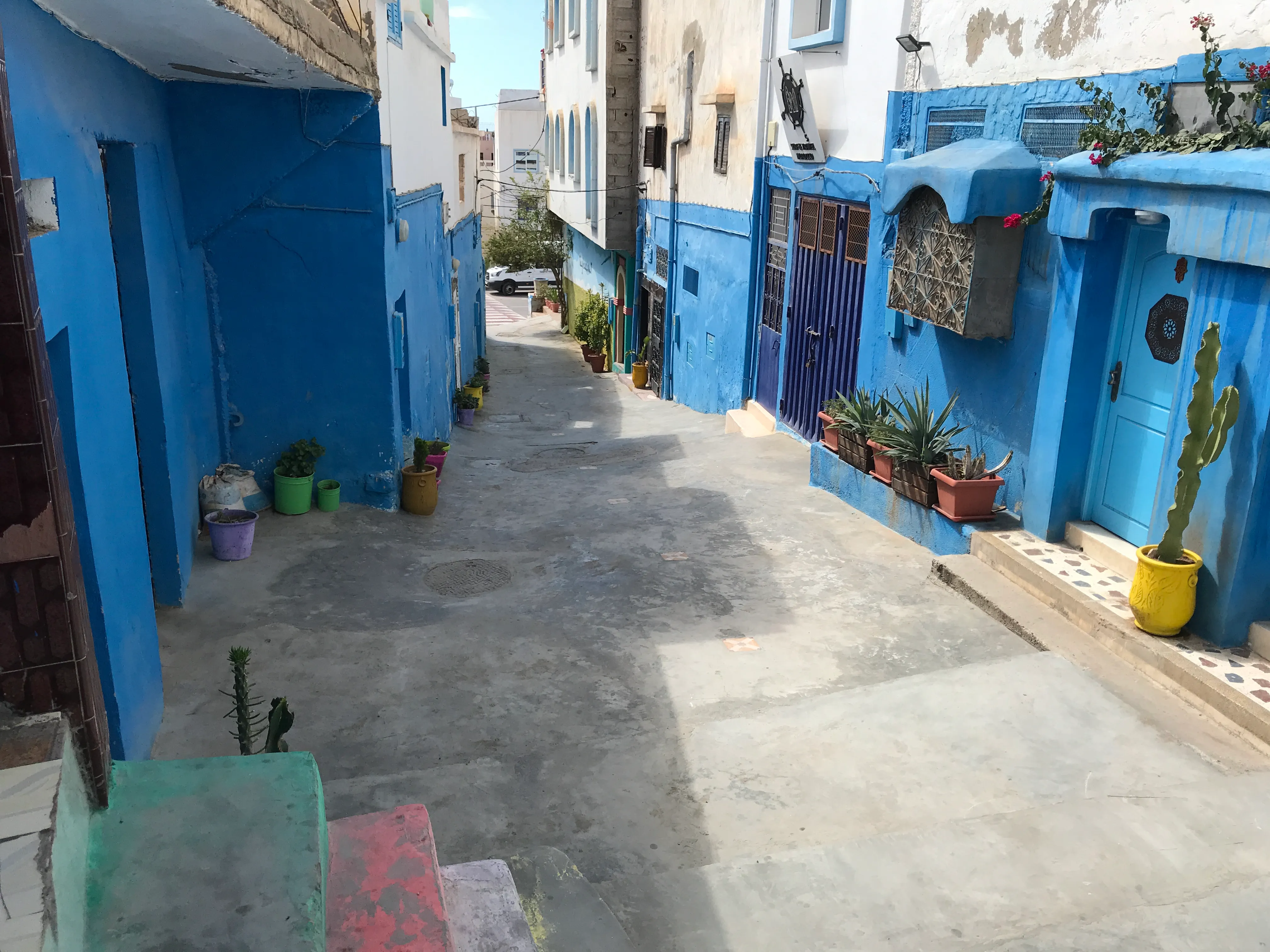
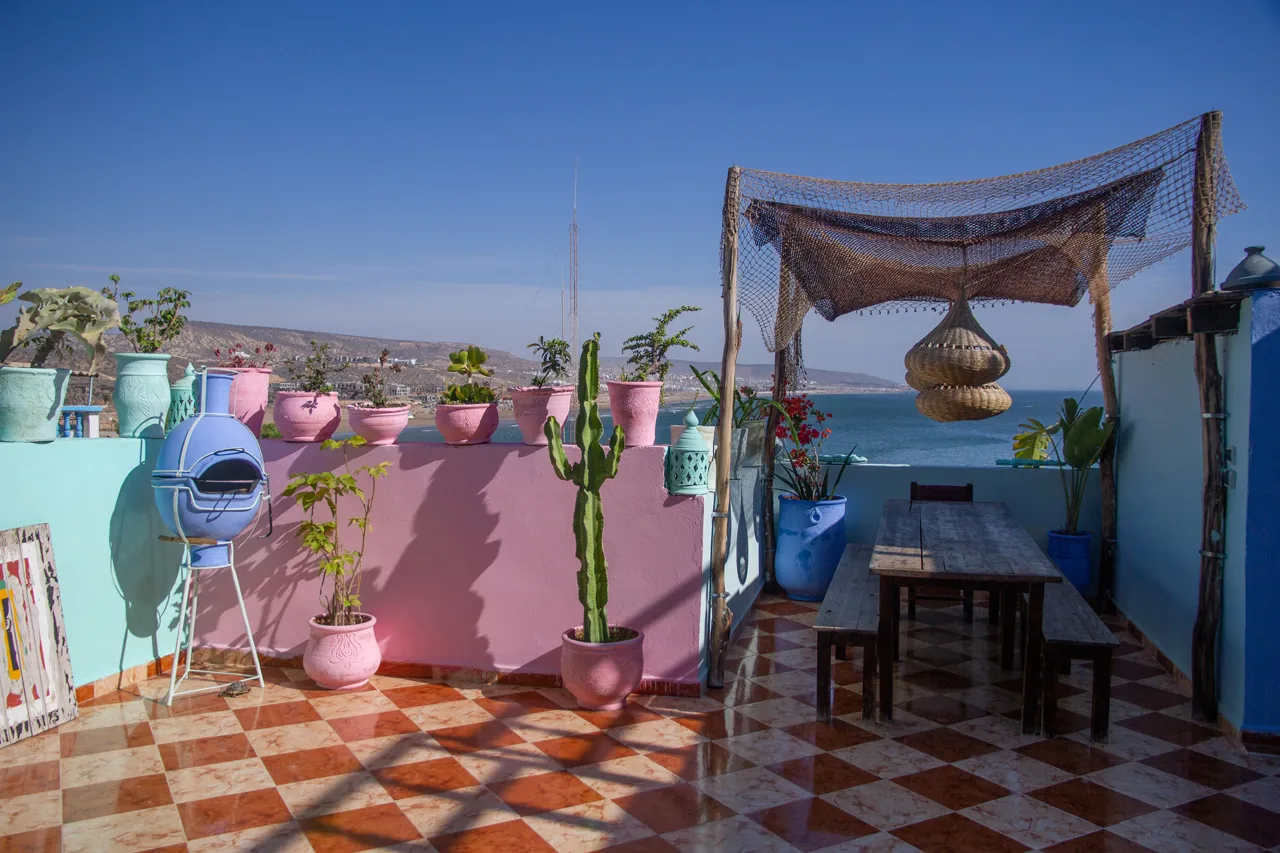
The village itself — small streets, blue boats, rooftop cafés where the entire international surf community parks every afternoon.
- Hostel dorm beds: 150–250 MAD/night (~€14–23)
- Private room: 300–500 MAD/night (~€28–46)
- Surf camp: €320–450/week
- Mid-range dinner: 90–150 MAD (~€8–14)
Imsouane (the quiet base)
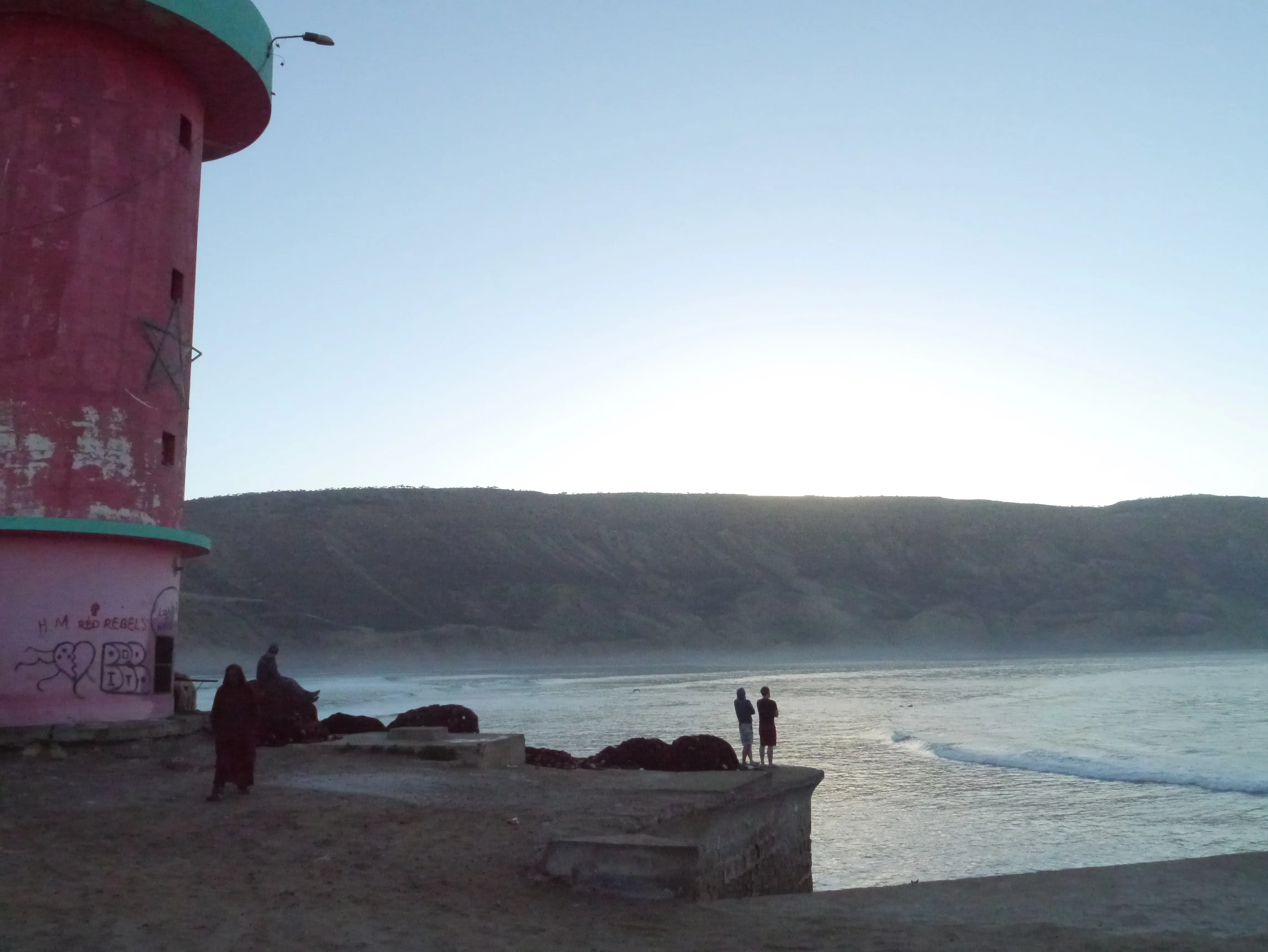
Smaller supply, slightly higher prices, but it’s the option that feels most like Chicama in terms of village atmosphere — a fishing port where the boats come in at 11 a.m. and you eat the catch grilled at the quay for 50 MAD.
- Dorm bed: 150–280 MAD/night (~€14–26)
- Surf camp: €320–500/week
- Book 4–6 weeks ahead even for June — supply is tight.
What a 7-day budget actually looks like
Working back from a real trip a friend ran in June 2025, with flights excluded:
| Item | Cost (EUR) |
|---|---|
| Hostel dorm × 7 nights (Tamraght) | €98 |
| Two surf sessions / day × 6 days, board rental included (drop-in at a camp) | €120 |
| Food (breakfast at the hostel, lunch at a local spot, dinner out) | €105 |
| Agadir airport transfer (split with two others) | €15 |
| Sunday day-trip to Imsouane (shared taxi + lunch) | €25 |
| Coffee, snacks, tips, the occasional beer | €40 |
| Total | ~€403 |
That’s the same range you’d budget for a comparable Chicama week (Chicama hostels are 40–80 PEN, lessons 60 PEN, food cheap) — so you’re not paying a premium for the Atlantic.
Why June crowd-counts are the real selling point
If “small crowds” was your favourite thing about Chicama, June in Morocco delivers harder than you’d expect:
- November–February (peak): Anchor Point is 30–50 surfers on a swell. Hash Point and Killer Point overflow. Imsouane’s Cathedral gets jockeyed by experienced visitors who’ve flown in for the swell window.
- June (shoulder): Anchor Point sits at 10–15. Most beach breaks are empty until 9 a.m. South Beach in Imsouane is mostly schools — easy to find space. Hash Point goes whole sessions with 5 people in the water.
This is the part nobody puts in the brochure. The trade-off for smaller swell is a coast that breathes again.
A 7-day game plan
If you’re flying into Agadir for a week, here’s how to actually use the time:
Day 1 — Land at AGA, transfer to Tamraght (~50 min, 200 MAD shared). Check in, walk to Banana Beach, paddle out for an afternoon mush session to get the jet lag out.
Day 2–3 — Tamraght / Taghazout rotation. Dawn at Anchor Point (if any swell), late morning at Hash Point, lazy afternoon at Banana for a second small session. See our Anchor Point guide for the wind/tide windows.
Day 4 — Drive or shared-taxi to Imsouane (55 km, ~1 h 10). Long session at the Cathedral if it’s running, or South Beach if it’s flat. Sleep one night in the village.
Day 5 — Imsouane morning + drive back. Grilled fish lunch at the port (45 MAD, the meal you’ll remember most).
Day 6 — Down day / Paradise Valley. Hire a taxi (~250 MAD round trip) to the freshwater pools 45 min inland. The Atlas foothills, palm gorge, a swim in cold pools. Recovery for the legs.
Day 7 — Last dawn at your favourite spot, transfer to the airport. Buy argan oil at the souk on the way.
The honest “if you must have a left” footnote
Because the Reddit thing is to actually answer the question: if you genuinely cannot live without riding lefts for two weeks, Morocco isn’t the move. Three places that scratch the Chicama itch more directly:
- Pavones, Costa Rica. Second-longest left in the world. Small village, cheap cabinas, June is the start of the rainy/swell season. You’ll know within five minutes whether you’re somewhere that gets it.
- Popoyo, Nicaragua. Not a single point, but a cluster of lefts and rights with consistent June swell and prices that match Chicama.
- Punta Roca / El Tunco, El Salvador. A long, racy right-hand point (yes, right again — apologies) but the cheap-hostel and small-village scene is exactly what you described. Better as a “next year” trip.
If you want the same trip texture without crossing the Pacific again, though — small village, cheap bed, long peeling wave, time to surf twice a day for two weeks — Tamraght or Imsouane in June is genuinely the answer. You’ll just be doing it on your forehand.
TL;DR for the skim-readers
- Not a like-for-like. Morocco is mostly rights. If lefts are non-negotiable, look at Pavones or Popoyo.
- June = small but uncrowded. 0.6–1.5 m average, glassy mornings, alizé wind by midday.
- The Chicama-vibe wave is Imsouane’s Cathedral (a right, but 200–600 m of slow peeling wall).
- Hostel beds from €11/night in Tamraght, €14 in Taghazout, €14–26 in Imsouane.
- A week lands around €400 excluding flights.
- Crowds drop by half compared to winter peak — the real reason to come in June.
Plan the calendar side properly with our Morocco surf-season guide, or read the full spot map if you want to see what else is along the coast.
FAQ
- Is Morocco really a Chicama alternative if it's mostly right-handers?
- Not a like-for-like swap — Chicama is the world's longest left and Morocco's headline waves are rights. But the *trip* is the same: a small fishing village, cheap hostels, long peeling walls that let you work manoeuvres, and a relaxed local culture. If the goofy-footer in you is non-negotiable, look at Pavones (Costa Rica) or Popoyo (Nicaragua). If you just want the vibe, Morocco delivers.
- What's surf like in Taghazout and Imsouane in June?
- Small and clean. The big Atlantic groundswells are an October-to-March game; June drops the average down to 0.6–1.5 m with glassy mornings and northerly side-shore wind by afternoon. It's the time when surf schools fill up — beginners and intermediates have a great month, advanced surfers will find it underwhelming unless a south swell sneaks in.
- How cheap are hostels and surf camps in June?
- Cheap. Shoulder season = 20-30% off winter rates. Hostel dorm beds in Tamraght and Taghazout run 120–250 MAD per night (~€11–23). Surf camps with breakfast, transport and 2 sessions a day land at €280–450 for the week. Imsouane is similar, slightly higher because supply is tighter.
- How many surfers will I share a wave with?
- Far fewer than November–February. Anchor Point goes from 40-deep on a winter swell to a relaxed 10–15 in June. Imsouane's Cathedral stays mellow — locals, a few longboarders, the surf-school groups on South Beach. You'll rarely fight for a wave.
- What's the closest thing to Chicama's long left in Morocco?
- Honestly, there isn't one. The closest *experience* — a slow, forgiving point that lets you ride 200–600 m walls — is Imsouane's Cathedral, but it's a right. The few decent lefts (Killer Point's inside, Devil's Rock) are short and reefy. For the Chicama-length left fix, you'll need to leave Morocco.